

-
1 NGC
1) Компьютерная техника: Next Generation Computer2) Сокращение: Naval Gunfire Control, New General Catalog, New Generation Computer, New General Catalog (Drayer catalog)3) Университет: North Greenville College4) Вычислительная техника: New General Catalog (Space)5) СМИ: National Geographic Channel6) Энергосистемы: National Grid Company7) Чат: Not Generally Close -
2 to
tu: (полная форма) ;
(редуцированная форма, употр. перед гласными) ;
(редуцированная форма, употр. перед согласными)
1. предл.
1) местные и пространственные значения а) выражает движение к какой-л. точке и достижение ее, управляет словом, обозначающим эту точку;
также с наречиями к, в, тж. перен. Forester was sent to Edinburgh. ≈ Форестера послали в Эдинбург. The first train to London. ≈ Первый поезд в Лондон, на Лондон. He has removed to near Rugby. ≈ Он переехал поблизости от Регби. Come here to me. ≈ Подойди сюда ко мне. When he came to the crown. ≈ Когда он взошел на престол. To trace how the stories came to Spain. ≈ Отследить, как вести об этом попали в Испанию. б) значение направления в какую-л. сторону к, на Standing with his back to me. ≈ Он стоял спиной ко мне. He pointed to a clump of trees. ≈ Он указал на рощицу. The bedrooms to the back are much larger. ≈ Спальни на задней стороне дома гораздо больше. в) выражает предел движения, протяжения в пространстве до Protestant to the backbone. ≈ Протестант до мозга костей. The thermometer has risen to above
32. ≈ Температура перевалила за
32. It is eleven miles from Oxford to Witney. ≈ От Оксфорда до Уитни одиннадцать миль. г) выражает нахождение где-л. в, на Stayed to Canfields all night. ≈ Оставался в Кенфилдс всю ночью Were you ever to the Botanic Gardens? ≈ Ты когда-нибудь бывал в Ботаническом Саду? to work д) выражает соположение, соприкосновение к, у He stood up to the wall. ≈ Он стоял, прислонившись к стене. His mouth to my mouth. ≈ Его рот касался моего. They will find everything ready to their hands. ≈ У них все будет под рукой.
2) временные отношения;
временной предел, окончание срока к, до The parliament was prorogued to the tenth of February. ≈ Перерыв в работе парламента должен был продлиться до десятого февраля. The business hours were from ten to six. ≈ Рабочий день был с десяти до шести. How long is it to dinner, sir? ≈ Сколько осталось до ужина, сэр? It was exactly a quarter to four o'clock. ≈ Было без четверти четыре. Ainsworth came to this time. ≈ К этому времени подошел Эйнсворт.
3) отношения достижения цели, результата, эффекта а) выражает цель деятельности для, под The captain came to our rescue. ≈ Капитан пришел к нам на помощь. The indispensable means to our end. ≈ Необходимые средства для достижения нашей цели. You sit down to Scripture at your bureau. ≈ Засядь-ка за Писание у себя в кабинете. Having laid down a few acres to oats. ≈ Отведя несколько акров под овес. The land sown to barley increases. ≈ Площади, засеваемые хмелем, расширяются. б) конечный пункт движения, ожидаемый исход, результат He had made up his mind to the event. ≈ Он настроился на это дело. To his astonishment. ≈ К его удивлению. To light those buildings by electricity, to the total exclusion of gas. ≈ Освещать эти здания электричеством, что приведет к полному отказу от газа. But now, to his despair, he felt that his patient herself was fighting against his skill. ≈ Теперь, к своему отчаянию, он понял, что теперь против него борется и сам пациент. The glasses are all to bits. ≈ Стекла все вдребезги разбиты. в) по отношению к, в отношении к Instead of marrying Torfrida, I have more mind to her niece. ≈ Я не хочу жениться на Торфриде, у меня больше склонности к ее племяннице. This lease is a document of title to land. ≈ Этот документ об аредне есть документ о праве собственности на эту землю. The high-born poem which had Sackville to father. ≈ Поэт благородного происхождения, чей отец был Сэквилл.
4) со словами, выражающими объем, степень, размер Sir Tomkyn swore he was hers to the last drop of his blood. ≈ Сэр Томкин поклялся, что принадлежит ей полностью, до самой последней капли крови. He was generally punctual to a minute. ≈ Он был обычно пунктуален до минут. The bishops were hostile to a man. ≈ Все священнки до единого были враждебны. Gallant, courteous, and brave, even to chivalry. ≈ Галантный, вежливый и бесстрашный, почти до рыцарства. She was in love with him to distraction. ≈ Она была влюблена в него до самозабвения. The schoolroom was hot to suffocation. ≈ В классе было жарко так, что можно было задохнуться.
5) в значении добавки, добавления, приложения а) под, к, вместе с;
у It is impossible any longer to find a pound of butter or cream to our tea in all the country. ≈ Теперь нигде невозможно найти ни масла, ни сливок к чаю. I am growing old, and want more mustard to my meat. ≈ Я старею, мне требуется больше горчицы к мясу. One little boy complained that there was no rim to his plate. ≈ Один мальчик пожаловался, что у его тарелки не было края. Without clothing to his back, or shoes to his feet. ≈ Спина была голая, на ногах не было обуви. ride to hounds б) о музыке There is an old song, to the tune of La Belle Catharine. ≈ Есть старая песенка, на мелодию "La Belle Catharine". в) к My lips might freeze to my teeth. ≈ У меня губы сейчас к зубам примерзнут. To that opinion I shall always adhere. ≈ Я всегда буду выражать эти взгляды. г) для Courage is the body to will. ≈ Смелость - плоть для воли. The Hall now forms the vestibule to the Houses of Parliament. ≈ Этот зал теперь служит вестибюлем перед залами заседаний парламента. д) у, в (как свойство, характеристика) Tell me what there is to this shindy. ≈ Ну-ка расскажи, о чем здесь веселье There's a lot to him that doesn't show up on the surface. ≈ В нем есть многое, что не видно на поверхности.
6) отношение к стандарту, точке отсчета а) для, при, по сравнению с, на фоне It was so thick to its length. ≈ При ее длинне эта штука была очень толстая. Now, pretty well to what they had been. ≈ Теперь они чувствуют себя гораздо лучше, по сравнению с тем, что с ними было. Strangely contrasted to the chill aspect of the lake. ≈ Странно контрастирующий с леденящим видом озера. б) к (о соотношении сил) Their enemies were four to one. ≈ Враг превосходил их по численности в четыре раза. Mr. Gladstone's motion was carried by 337 to
38. ≈ Предложение г-на Гладстона прошло, за 337 человек, против
38. Odds are ten to three. ≈ Ставки десять к трем. в) по, для, в соответствии с He dresses to the fashion. ≈ Он одевается по моде. Temple is not a man to our taste. ≈ Для нас Темпл не человек. Men were noodles to her. ≈ Для нее все мужчины были слабаки. To all appearance. ≈ Судя по всему. He has not been here to-day to my knowledge. ≈ Насколько я знаю, сегодня его не было. г) к, в отношении, по поводу What will Doris say to it? ≈ Что на это говорит Дорис? д) с, к, по отношению к Inclined to the horizon. ≈ Наклоненный к горизонту. He was unable to see how they lie to each other. ≈ Он не мог осознать, насколько они лгут друг другу.
7) скорее аффективные значения а) переход к какой-л. деятельности Let's to it presently. ≈ Давайте теперь обратимся к этому. Come, lads, all hands to work! ≈ Так, ребята, за работу! б) причинение кому-л. или чему-л. чего-л. I presented the gun to him without any other idea but that of intimidation. ≈ Я наставил на него пистолет, имея в виду только испугать его. His father's unmerciful use of the whip to him. ≈ Отец нещадно охаживал его кнутом. Clodius had an old grudge to the King, for refusing to ransom him. ≈ У Клодия давно были к королю счеты зуб за то, что тот не выкупил его. в) обращение к кому-л. Did you not mark a woman, my son rose to? ≈ Разве ты не отметил ту женщину, которой поклонился мой сын? A hymn in hexameters to the Virgin Mary. ≈ Гекзаметрический гимн в честь Девы Марии. Come, speak to him! ≈ Ну же, заговори с ним! With continual toasting healths to the Royal Family. ≈ С бесконечными тостами за здравие королевской фамилии. г) реакция на что-л. The dead leaf trembles to the bells. ≈ Колокольный звон колышет мертвые листья. All the throng who have danced to a merry tune. ≈ Все те, что танцевали под развеселые мелодии (Питер Хэммилл, "Детская вера во взросление")
8) синтаксические функции утраченного дательного падежа а) обозначает реципиента Great dishonour would redound to us. ≈ Великое бесчестие обратится на нас. Having a Son born to him. ≈ У него родился сын. We had the railway-carriage all to ourselves. ≈ Нам был целиком предоставлен вагон. They acted under no authority known to the law. ≈ Они действовали по праву, которого не знает закон. б) обозначает носителя эмоции To these men Luther is a papist, and Caluin is the right prophet. ≈ Для этих людей Лютер папист, а Кальвин - истинный пророк. To me it is simply absurd. ≈ По мне, это просто абсурд. It means a great deal to him. ≈ Для него это много значит. в) указывает объект чувства That natural horror we have to evil. ≈ Наше естественное отвращение ко злу. Bacchus is a friend to Love. ≈ Вакх друг любви. That homage to which they had aspired. ≈ Уважение к себе, к которому они стремились. г) указывает на ссылку или источник I have already alluded to the fact. ≈ Я уже ссылался на это. Menander attests to it. ≈ Об этом свидетельствует Менандр. д) в управлении ряда глаголов, вводит непрямой объект We fought them and put them to the run. ≈ Мы сразились с ними и обратили их в бегство. This day's paper I devote to women. ≈ Сегодняшний доклад я посвящаяю женщинам. To admit Roman Catholics to municipal advantages. ≈ Предоставить католикам городские привилегии. е) фин. вводит статью расхода To Balance from 1899 195 pounds 11s. ≈ На покрытие баланса за 1899 год 195 фунтов 11 шиллингов 3 To J. Bevan and Co., for Bales, 2349 pounds. ≈ Дж.Бевиану и Ко, за Бейлс, 2349 фунтов. ж) вводит лиц, использующих какое-л. стандартное именование или выражение Terence James MacSwiney on the baptismal register, but Terry always to his friends. ≈ Теренс Джеймс Максвини значится в церковной книге, но для друзей он всегда был Терри. Lindy( Miss Hoffmann to the kids) had to give it back down to them. ≈ Линди (для детей мисс Хоффманн) пришлось отдать эту вещь им обратно.
2. нареч.
1) направление, прямо может не переводиться Three young owls with their feathers turned wrong end to. ≈ Три совенка с перьями, развернутыми не туда.
2) а) контакт, сопркосновение I can't get the lid of the trunk quite to. ≈ Я не могу закрыть крышку сундука. б) готовность Th horses are to. ≈ Лошади готовы.
3. частица
1) приинфинитивная частица You have to help him. ≈ Тебе нужно помочь ему.
2) своего рода местоглаголие, заменяет опущенный инфинитив I kept on, I had to. ≈ Но я прошел дальше, я был должен. I wanted to turn round and look. It was an effort not to. ≈ Я хотел оглянуться. Стоило громадных усилий не сделать этого. указывает на приведение в нужное состояние или положение, передается глагольными приставками при-, за- - to pull the shutters to закрыть ставни - push the door to захлопни дверь - the door blew to дверь захлопнулась - put the horses to запряги(те) лошадей указывает на начало действия: за - we turned to gladly /with a will/ мы с воодушевлением взялись за работу - they were hungry and fell to они были голодны и набросились на еду указывает на приведение в сознание или возвращение сознания - he came to он пришел в себя - to bring smb. to with smelling salts привести кого-л. в сознание нюхательной солью указывает на определенное направление - his hat is on the wrong side to у него неправильно надета шляпа - a ship moored head to корабль, пришвартованный против ветра - to and again( устаревшее) с одного места на другое;
туда и сюда;
взад и вперед;
из стороны в сторону;
в разные стороны;
вверх и вниз - to and back с одного места на другое;
туда и сюда;
взад и вперед;
из стороны в сторону;
в разные стороны;
вверх и вниз - close to рядом - we were close to when it happened мы были рядом, когда это случилось - keep her to! (морское) держи к ветру (команда) в пространственном значении указывает на направление: к, в, на - the road to London дорога в Лондон - the way to glory путь к славе - a flight to the Moon полет на Луну /в сторону Луны/ - head to the sea (морское) против волны - on one's way to the station по дороге к станции /на станцию/ - to go to town ехать /отправляться/ в город - to go to the sea ехать к морю, поехать на море - to go to Smith пойти к Смиту - where will she go to? куда она пойдет? - to turn to the left повернуть налево - to point to smth. указывать на что-л. - to see smb. to the station проводить кого-л. на вокзал - to hold up one's hands to heaven воздевать руки к небу - to put a pistol to his head приставить пистолет к его голове - I'm off to London я отправляюсь в Лондон - he wears his best clothes to church он ходит в церковь в парадном костюме в пространственном значении указывает на движение до соприкосновения с чем-л.: на, за, к - to fall to the ground упасть на землю - he swung his kit-bag to his back он закинул вещевой мешок за спину в пространственном значении указывает на расстояние: до - is it far to Moscow? далеко ли до Москвы? - it is five miles to the station до станции пять миль в пространственном значении указывает на положение по отношению к чему-л.: к, на;
вместе с сущ. тж. передается наречиями - rooms to the back задние комнаты - with one's feet to the fire протянув ноги к огню - with one's back to the wall спиной к стене - to lie to the south of лежать /быть расположенным/ к югу от - the window looks to the north окно выходит на север - placed at the right angle to the wall поставленный под прямым углом к стене - perpendicular to the floor перпендикулярно к полу - a line tangent to a circle (математика) касательная к окружности в пространственном значении указывает на временное местопребывание( после глагола be в префекте): в - he has been to Volgograd twice this year в этом году он дважды был в Волгограде - have you been to bed? вы спали? в пространственном значении указывает на (американизм) (разговорное) (диалектизм) пребывание в каком-л. месте: в - he is to home он дома в пространственном значении указывает на посещение какого-л. учреждения: в - to go to school ходить в школу - to go to the theatre ходить /идти/ в театр указывает на лицо, реже предмет, к которому направлено действие: к, перед;
часто передается тж. дат. падежом - greetings to smb. приветствие кому-л. - to listen to smb., smth. слушать кого-л., что-л. - to speak to smb. разговаривать с кем-л. - to send smth. to smb. послать что-л. кому-л. - to explain smth. to smb. объяснить что-л. кому-л. - to submit the material to the committee представить материалы в комитет - to reveal a secret to smb. открыть кому-л. секрет - to apologize to smb. извиниться перед кем-л. - to play to packed houses играть перед полным залом - he showed the picture to all his friends он показал картину всем своим друзьям - he spoke to the demonstration он обратился с речью к участникам демонстрации - whom did you give the letter to? кому вы отдали письмо? указывает на лицо или предмет, воспринимающие какое-л. воздействие или впечатление или являющиеся объектом какого-л. отношения: к, для;
по отношению к;
передается тж. дат. падежом - attitude to smb., smth. отношение к кому-л., чему-л. - his duty to his country его долг по отношению к родине, его патриотический долг - known to smb. известный кому-л. - clear to smb. ясный кому-л. /для кого-л./ - favourable to smb. благоприятный для кого-л. - unjust to smb. несправедливый к кому-л. - a symptom alarming to the doctor тревожный симптом для доктора - pleasing to smb. приятный кому-л. - to be cruel to smb. быть жестоким к кому-л. - it was a mystery to them для них это было загадкой - injurious to smb., smth. вредный для кого-л., чего-л. - it seems to me that мне кажется, что - smth. has happened to him с ним что-то случилось указывает на лицо, эмоционально или интеллектуально заинтересованное в чем-л.;
обычно передается дат. падежом - what is that to you? тебе-то какое до этого дело?;
ты-то тут причем?;
почему это тебя интересует? - life is nothing to him он не дорожит жизнью указывает на лицо, в честь которого что-л. совершается или провозглашается: в честь, за;
передается тж. дат. падежом - a toast to your success тост за ваш успех - here is to your health за ваше здоровье - a hymn to the sun гимн солнцу - to build a monument to smb. воздвигнуть памятник кому-л. /в честь кого-л./ указывает на объект высказывания и т. п.: в, о, на или придаточное предложение - to bear witness to smth. давать показания о чем-л. - to testify to smth. показывать, что;
представлять доказательства о том, что - to swear to smth. поклясться в чем-л. - to speak to smth. высказываться в поддержку чего-л. - to confess to smth. признаваться в чем-л. - to allude to smth. сослаться или намекнуть на что-л. указывает на объект права, претензии и т. п. - to have a right to smth. иметь право на что-л. - to lay a claim to smth. заявить претензию на что-л. - the pretender to the throne претендент на трон - a document of title to land документ, дающий право на владение землей указывает на (сознательную) реакцию на что-л.: на;
передается тж. дат. падежом - (dis) obediance to smb.'s orders (не) подчинение чьему-л. приказу - in answer /in reply/ to smth. в ответ на что-л. - to reply to smb. отвечать кому-л. - to come to smb.'s call явиться по чьему-л. зову /на чей-л. зов/ - what do you say to that? что вы скажете по этому поводу? - what did he say to my suggestion? как он отнесся к моему предложению? - what do you say to a short walk? как насчет того, чтобы прогуляться? указывает на эмоциональную реакцию на что-л. или оценку чего-л.: к - to his surprise к его удивлению - to his credit к его чести - to her horror, the beast approached к ее ужасу, зверь приближался указывает на реакцию неодушевленных предметов на что-л. - waves sparkling to the moonbeams волны, сверкающие в лунном свете - flimsy houses that shake to the wind легкие домики, которые дрожат от ветра указывает на предел или степень: до - to the end, to the last до конца - to a man до последнего человека - to a certain extent до некоторой степени - to a high degree в высокой /в большой/ степени - to the exclusion of all others и никто больше, и никто другой - tired to death смертельно усталый - wet to the skin промокший до костей - stripped to the waist раздетый до пояса - shaken to the foundations поколебленный до основания - rotten to the core насквозь гнилой, прогнивший до сердцевины - to fight to the last drop of one's blood биться до последней капли крови - to defend one's country to the death стоять насмерть, защищая родину - to count up to ten считать до десяти - to cut smth. down to a minimum довести что-л. до минимума - the hall was filled to capacity зал был заполнен до отказа - the membership of the club increased to 350 количество челнов клуба достигло 350 - the room was hot to suffocation от жары в комнате нечем было дышать указывает на временной предел: до - to the end of June до конца июня - to the end of one's life до конца своей жизни - the custom survives to this day этот обычай сохранился до наших дней /существует и поныне/ - I shall remember it to my dying day я буду помнить это до (своего) смертного часа указывает на степень точности: до - to an inch с точностью до дюйма - a year to the day ровно год (день в день) - to guess the weight of smth. to within a kilo угадать вес чего-л. почти до килограмма - the train arrived to a minute поезд прибыл минута в минуту указывает на пределы колебаний: до - the weather over the period was moderate to cool погода в этот период колебалась от умеренной до прохладной указывает на изменение положения или достижение нового состояния и т. п.: в, до, на;
передается тж. глаголом - to go to sleep заснуть - to go to ruin разрушиться - to run to seed прорасти - to put smb. to flight обратить кого-л. в бегство - to tear smth. to pieces /to bits/ разорвать что-л. на куски - to burn to ashes сгореть дотла - to beat smb. to death избить кого-л. до смерти - to convert a warehouse to a dance-hall превратить склад в зал для танцев - it moved him to tears это растрогало его до слез - he grew to manhood он стал взрослым человеком указывает на меру наказания: к - to sentence smb. to prison приговорить кого-л. к тюремному заключению - to sentence smb. to death приговорить кого-л. к смерти /к смертной казни/ указывает на переход к другой теме разговора, к другому занятию и т. п.: к - now to the matter at hand теперь займемся нашим вопросом - he turned to the page he had marked он вернулся к странице, которую отметил - the conversation turned to painting разговор перешел на живопись указывает на начало действия: за - to fall /to set, to turn/ to smth. приниматься за что-л. - he turned to eating он принялся за еду указывает на цель: на, к, для, с целью - to this end с этой целью - to the end that с (той) целью чтобы;
для того чтобы - to no purpose напрасно, безрезультатно - a means to an end средство, ведущее к цели - with a view to your wellbeing заботясь о вашем благополучии - they came to our aid они пришли к нам на помощь - to come to dinner прийти к обеду /пообедать/ указывает на результат: к - to come to a conclusion прийти к выводу указывает на тенденцию, склонность, намерение: к - a tendency to smth. тенденция к чему-л. - to be given to smth. быть склонным к чему-л. указывает на предназначение: для, под - to be born to a bitter fate быть рожденным для горькой доли - to be born to a fortune родиться наследником несметных богатств - a horse bred to the plow лошадь, приученная к плугу /приученная пахать/ - a field planted to rice поле, отведенное /пущенное/ под рис;
поле, засеянное рисом указывает на возможность воздействия, незащищенность против воздействия чего-л.;
передается дат. падежом - open to criticism дающий пищу для критики - open to persuasion поддающийся убеждению - exposed to the sunlight подвергающийся действию солнца, незащищенный от солнца употребляется при выражении сравнения или сопоставления: в сравнении с, по сравнению с;
передается тж. дат. падежом - compared to... по сравнению с... - equal to smth. равный чему-л. - superior to smth. лучше, чем что-л.;
превосходящий что-л. - inferior to smth. хуже, чем что-л. - similar to smth. подобный чему-л.;
похожий на что-л. - to prefer coffee to tea предпочитать кофе чаю - he prefers listening to talking он больше любит слушать, чем говорить - this is nothing to what it might be это пустяки по сравнению с тем, что могло (бы) быть употребляется при выражении соотношения или пропорции: к, на - one to four один к четырем - ten votes to twenty десять голосов против двадцати - three goals to nil три - ноль( в футболе и т. п.) - the score was 7 to 9 счет был семь на девять - three parts flour to one part butter три части муки на одну часть масла (кулинарный рецепт) - three houses to the square mile три дома на квадратную милю - four apples to a pound четыре яблока на фунт, по фунту за четыре яблока - the chances are ten to one один шанс против десяти - 2 is to 4 as 4 is to 8 2 относится к 4 как 4 к 8 - it's hundred to one (that) it won't happen вероятность того, что это не случится /не произойдет/, не больше одной сотой употребляется при выражении соответствия чему-л.: по, на;
передается тж. дат. падежом - to my knowledge насколько я знаю;
насколько мне известно - to the best of me remembrance насколько я помню - to my mind /thinking/ по-моему - (not) to one's liking /taste/ (не) по вкусу кому-л. - made to order сделанный на заказ - words set to music слова, положенные на музыку - an opera to his own libretto опера по его собственному либретто - the novel is true to life роман правильно отражает жизнь - what tune is it sung to? на какой мотив это поется? - keep to the rules придерживайтесь правил употребляется при выражении (музыкального) сопровождения: под - to dance to the piano танцевать под рояль - to write to smb.'s dictation писать под чью-л. диктовку указывает на составную часть чего-л. или принадлежность к чему-л.: к, от, для;
передается тж. род. падежом - foreword to the book предисловие к книге - a key to a desk ключ от письменного стола - a frame to a picture рама для картины указывает на фазу процесса, аспект явления - there is no end to it этому нет конца - there is no exception to this rule из этого правила нет исключений указывает на контакт, близость( в адвербиальных оборотах с повторением существительного): к - face to face лицом к лицу - hand to hand бок о бок, рядом - shoulder to shoulder плечо к плечу - they stood man to man они стояли тесно /один к одному/ указывает на близость, тесное соприкосновение, а также прикрепление: к - with her hands to her eyes закрыв глаза руками - to be close to smb., smth. быть близко к кому-л., чему-л. - to tie smth. to smth. привязать что-л. к чему-л. - to fix smth. to smth. прикрепить что-л. к чему-л. - to clasp smb. to one's heart прижать кого-л. к сердцу - to fasten smth. to the wall прикрепить что-л. к стене - he held on to the rail with one hand одной рукой он держался за перила - the houses all had numbers to them на всех домах были написаны номера - he walked without shoes to his feet он шел босиком указывает на добавление, прибавление или сложение: к, с - put it to what you already have прибавьте /добавьте/ это к тому, что у вас уже есть - add five to the sum прибавьте к этой сумме пять - will you have sugar to your tea? вы будете пить чай с сахаром? указывает на родственные, служебные и др. отношения;
передается род. падежом - heir to an estate наследник имущества - ambassador to the King of Sweden посол при дворе шведского короля - interpreter to UNO переводчик ООН - secretary to the manager секретарь управляющего - apprentice to a tailor ученик портного - to be engaged to smb. быть помолвленным с кем-л. - she is mother to the child она мать этого ребенка - he has been a good father to them он был им хорошим отцом - Charles is brother to John Чарльз - брат Джона указывает на содержание или степень содержательности чего-л.: в - a book without much to it не слишком интересная книга;
книга так себе - there isn't much to it в этом нет ничего особенного /мудреного/;
это немногого стоит - there's nothing to it это проще простого, это проще пареной репы;
в этом нет никакой премудрости;
это яйца выеденного не стоит - that's all there is to it вот и все;
вот и вся недолга;
это очень просто - is there nothing more to civilization than a moral code? неужто( вся) цивилизация сводится к морали? указывает на время по часам: без - ten (minutes) to (two) без десяти (два) - (a) quarter to five без четверти пять указывает на отнесение к какому-л. времени в прошлом: к - a ceremony dating to the first century обряд, относящийся к первому веку указывает на (диалектизм) точное время: в - they were ready to three o'clock они были готовы к трем часам (бухгалтерское) указывает на отнесение суммы в дебет счета - to goods $100 100 долларов на товары /отнесение стоимости товаров в 100 долларов/ в дебет счета (устаревшее) указывает на использование в каком-л. качестве: как, в - he took her to wife он взял ее в жены - to call smb. to witness ссылаться на кого-л., призывать кого-л. в свидетели > from beginning to end от начала до конца > from east to west с востока на запад > from nine o'clock to twelve с девяти до двенадцати часов > from day to day изо дня в день > from dawn to dusk с восхода до заката, от зари до зари > count from one to ten считай(те) от одного до десяти > to go from bad to worse все (время) ухудшаться, становиться все хуже и хуже > to all appearances по всей видимости > to the contrary наоборот > to a T полностью, совершенно > that suits me to a T это меня полностью устраивает > to oneself в свое распоряжение, в своем распоряжении > I had a room to myself у меня была отдельная комната > he kept it to himself он ни с кем этим не делился (тж. перен.) > to tell smth. to smb.'s face сказать что-л. кому-л. (прямо) в лицо > to jump to one's feet вскочить на ноги > to be used to smth. привыкнуть к чему-л. > he was used to good food он привык хорошо питаться > he was used to getting up early он привык рано вставать > to horse! по коням! (команда) > to arms! к оружию! (команда) > would to God /to Heaven/! о господи! употребляется при инфинитиве - to go away would be to admit defeat уйти означало бы признать себя побежденным - he refused to come он отказался прийти - I asked him to come я просил его прийти - he was seen to enter the house видели, что он вошел в дом - she would like it to be true она бы хотела, чтобы это оказалось правдой - I'm ready to do it я готов сделать это - you're foolish to believe it глупо, что ты веришь этому - he was the first to come он пришел первым - they had no time to lose им нельзя было терять времени - I have a letter to write мне надо написать письмо - there's a lot to do дел (еще) очень много - there was not a sound to be heard не было слышно ни звука - he is not to be trusted ему нельзя доверять - that's good to eat вкусная штука /вещь/ - the room is pleasant to look at на комнату приятно посмотреть - write down the address not to forget it запишите адрес, чтобы не забыть его - we parted never to meet again мы расстались, чтобы никогда больше не встречаться - to hear him talk you would imagine that he's somebody послушать его - так можно подумать, что он важная персона - to tell the truth по правде говоря - this house is to let этот дом сдается (внаем) употребляется после ряда глаголов, чтобы избежать повторения инфинитива - tell him if you want to скажите ему, если хотите - take the money, it would be absurd not to возьмите деньги;
было бы нелепо отказываться от них assistant ~ the professor ассистент профессора become a party ~ принимать участие to begin( on ( или upon) smth.) брать начало( от чего-л.) ;
to begin over начинать сызнова;
well begun is half done посл. = хорошее начало полдела откачало to ~ at the beginning начинать с самого начала;
to begin at the wrong end начинать не с того конца end: to begin at the wrong ~ начать не с того конца to begin (on (или upon) smth.) брать начало (от чего-л.) ;
to begin over начинать сызнова;
well begun is half done посл. = хорошее начало полдела откачало belong absolutely ~ принадлежать полностью ~ bring ~ poverty довести до бедности;
to fall to decay( или ruin) разрушиться, прийти в упадок to cheat( on smb.) вести себя нечестно( по отношению к кому-л.: другу, партнеру, мужу и т. п.) ~ избежать( чего-л.) ;
to cheat the gallows избежать виселицы ~ занимать( чем-л.) ;
to cheat time коротать время;
to cheat the journey коротать время в пути ~ занимать (чем-л.) ;
to cheat time коротать время;
to cheat the journey коротать время в пути ~ prep указывает на предел движения, расстояния, времени, количества на, до: to climb to the top взобраться на вершину counter ~ противоречащий, противоположный( чему-л.) ~ prep под (аккомпанемент) ;
в (сопровождении) ;
to dance to music танцевать под музыку;
he sang to his guitar он пел под гитару ~ prep указывает на: связь между действием и ответным действием к, на;
to this he answered на это он ответил;
deaf to all entreaties глух ко всем просьбам ~ bring ~ poverty довести до бедности;
to fall to decay (или ruin) разрушиться, прийти в упадок ~ prep указывает на принадлежность (к чему-л.) или на прикрепление (к чему-л.) к;
to fasten to the wall прикрепить к стене;
key to the door ключ от двери give consideration ~ обсуждать give consideration ~ рассматривать ~ мошенничать;
обманывать;
he cheated me (out) of five dollars он надул меня на пять долларов he could be anywhere from 40 ~ 60 ему можно дать и 40 и 60 лет ~ prep передается род. падежом и указывает на отношения: родственные: he has been a good father to them он был им хорошим отцом ~ prep под (аккомпанемент) ;
в (сопровождении) ;
to dance to music танцевать под музыку;
he sang to his guitar он пел под гитару I am going ~ the University я иду в университет;
the windows look to the south окна выходят на юг I can't get the lid of the trunk quite ~ я не могу закрыть крышку сундука ~ prep указывает на сравнение, числовое соотношение или пропорцию перед, к;
3 is to 4 as 6 is to 8 три относится к четырем, как шесть к восьми it was nothing ~ what I had expected это пустяки в сравнении с тем, что я ожидал ~ prep указывает на принадлежность (к чему-л.) или на прикрепление (к чему-л.) к;
to fasten to the wall прикрепить к стене;
key to the door ключ от двери ~ prep указывает на лицо, по отношению к которому или в интересах которого совершается действие;
передается дат. падежом: a letter to a friend письмо другу ~ prep указывает на эмоциональное восприятие к;
to my disappointment к моему разочарованию;
to my surprise к моему удивлению ~ prep указывает на эмоциональное восприятие к;
to my disappointment к моему разочарованию;
to my surprise к моему удивлению object ~ возражать, протестовать( против чего-л.) ~ prep указывает на соответствие по, в;
to one's liking по вкусу a party was thrown ~ the children детям устроили праздник ten ~ one he will find it out девять из десяти за то, что он это узнает;
the score was 1 to 3 спорт. счет был 1: 3 ~ prep передается род. падежом и указывает на отношения: подчинения по службе: secretary to the director секретарь директора ~ (began;
begun) начинать(ся) ;
she began weeping( или to weep) она заплакала ten ~ one he will find it out девять из десяти за то, что он это узнает;
the score was 1 to 3 спорт. счет был 1: 3 ~ the minute минута в минуту;
с точностью до минуты there is an outpatient department attached ~ our hospital при нашей больнице есть поликлинника ~ prep указывает на: связь между действием и ответным действием к, на;
to this he answered на это он ответил;
deaf to all entreaties глух ко всем просьбам to ~ (on (или upon) smth.) браться( за что-л.) ~ (began;
begun) начинать(ся) ;
she began weeping (или to weep) она заплакала ~ начинать ~ начинаться ~ основывать ~ приступать ~ создавать to ~ at the beginning начинать с самого начала;
to begin at the wrong end начинать не с того конца to ~ with прежде всего, во-первых ~ жулик ~ жульничество ~ занимать (чем-л.) ;
to cheat time коротать время;
to cheat the journey коротать время в пути ~ избежать (чего-л.) ;
to cheat the gallows избежать виселицы ~ мошенник ~ мошенничать;
обманывать;
he cheated me (out) of five dollars он надул меня на пять долларов ~ мошенничать ~ мошенничество;
обман ~ мошенничество ~ обман ~ обманщик, плут;
topping cheat виселица ~ обманщик ~ обманывать ~ плут ~ самозванец ~ шулер to: (from Saturday) to Monday( с субботы) до понедельника ~ prep указывает на высшую степень (точности, аккуратности, качества и т. п.) до, в;
to the best advantage наилучшим образом;
в самом выгодном свете ~ prep указывает на цель действия на, для;
to the rescue на помощь;
to that end с этой целью ~ обманщик, плут;
topping cheat виселица ~ prep указывает на направление к, в, на;
the way to Moscow дорога в Москву;
turn to the right поверните направо turn: ~ поворачивать(ся) ;
обращаться;
повертывать(ся) ;
to turn to the right повернуть направо;
to turn on one's heel(s) круто повернуться( и уйти) ~ prep указывает на направление к, в, на;
the way to Moscow дорога в Москву;
turn to the right поверните направо ~ prep указывает на лицо, в честь которого совершается действие: we drink to his health мы пьем за его здоровье to begin (on (или upon) smth.) брать начало (от чего-л.) ;
to begin over начинать сызнова;
well begun is half done посл. = хорошее начало полдела откачало I am going ~ the University я иду в университет;
the windows look to the south окна выходят на юг -
3 near cash
!гос. фин. The resource budget contains a separate control total for “near cash” expenditure, that is expenditure such as pay and current grants which impacts directly on the measure of the golden rule.This paper provides background information on the framework for the planning and control of public expenditure in the UK which has been operated since the 1998 Comprehensive Spending Review (CSR). It sets out the different classifications of spending for budgeting purposes and why these distinctions have been adopted. It discusses how the public expenditure framework is designed to ensure both sound public finances and an outcome-focused approach to public expenditure.The UK's public spending framework is based on several key principles:"consistency with a long-term, prudent and transparent regime for managing the public finances as a whole;" "the judgement of success by policy outcomes rather than resource inputs;" "strong incentives for departments and their partners in service delivery to plan over several years and plan together where appropriate so as to deliver better public services with greater cost effectiveness; and"the proper costing and management of capital assets to provide the right incentives for public investment.The Government sets policy to meet two firm fiscal rules:"the Golden Rule states that over the economic cycle, the Government will borrow only to invest and not to fund current spending; and"the Sustainable Investment Rule states that net public debt as a proportion of GDP will be held over the economic cycle at a stable and prudent level. Other things being equal, net debt will be maintained below 40 per cent of GDP over the economic cycle.Achievement of the fiscal rules is assessed by reference to the national accounts, which are produced by the Office for National Statistics, acting as an independent agency. The Government sets its spending envelope to comply with these fiscal rules.Departmental Expenditure Limits ( DEL) and Annually Managed Expenditure (AME)"Departmental Expenditure Limit ( DEL) spending, which is planned and controlled on a three year basis in Spending Reviews; and"Annually Managed Expenditure ( AME), which is expenditure which cannot reasonably be subject to firm, multi-year limits in the same way as DEL. AME includes social security benefits, local authority self-financed expenditure, debt interest, and payments to EU institutions.More information about DEL and AME is set out below.In Spending Reviews, firm DEL plans are set for departments for three years. To ensure consistency with the Government's fiscal rules departments are set separate resource (current) and capital budgets. The resource budget contains a separate control total for “near cash” expenditure, that is expenditure such as pay and current grants which impacts directly on the measure of the golden rule.To encourage departments to plan over the medium term departments may carry forward unspent DEL provision from one year into the next and, subject to the normal tests for tautness and realism of plans, may be drawn down in future years. This end-year flexibility also removes any incentive for departments to use up their provision as the year end approaches with less regard to value for money. For the full benefits of this flexibility and of three year plans to feed through into improved public service delivery, end-year flexibility and three year budgets should be cascaded from departments to executive agencies and other budget holders.Three year budgets and end-year flexibility give those managing public services the stability to plan their operations on a sensible time scale. Further, the system means that departments cannot seek to bid up funds each year (before 1997, three year plans were set and reviewed in annual Public Expenditure Surveys). So the credibility of medium-term plans has been enhanced at both central and departmental level.Departments have certainty over the budgetary allocation over the medium term and these multi-year DEL plans are strictly enforced. Departments are expected to prioritise competing pressures and fund these within their overall annual limits, as set in Spending Reviews. So the DEL system provides a strong incentive to control costs and maximise value for money.There is a small centrally held DEL Reserve. Support from the Reserve is available only for genuinely unforeseeable contingencies which departments cannot be expected to manage within their DEL.AME typically consists of programmes which are large, volatile and demand-led, and which therefore cannot reasonably be subject to firm multi-year limits. The biggest single element is social security spending. Other items include tax credits, Local Authority Self Financed Expenditure, Scottish Executive spending financed by non-domestic rates, and spending financed from the proceeds of the National Lottery.AME is reviewed twice a year as part of the Budget and Pre-Budget Report process reflecting the close integration of the tax and benefit system, which was enhanced by the introduction of tax credits.AME is not subject to the same three year expenditure limits as DEL, but is still part of the overall envelope for public expenditure. Affordability is taken into account when policy decisions affecting AME are made. The Government has committed itself not to take policy measures which are likely to have the effect of increasing social security or other elements of AME without taking steps to ensure that the effects of those decisions can be accommodated prudently within the Government's fiscal rules.Given an overall envelope for public spending, forecasts of AME affect the level of resources available for DEL spending. Cautious estimates and the AME margin are built in to these AME forecasts and reduce the risk of overspending on AME.Together, DEL plus AME sum to Total Managed Expenditure (TME). TME is a measure drawn from national accounts. It represents the current and capital spending of the public sector. The public sector is made up of central government, local government and public corporations.Resource and Capital Budgets are set in terms of accruals information. Accruals information measures resources as they are consumed rather than when the cash is paid. So for example the Resource Budget includes a charge for depreciation, a measure of the consumption or wearing out of capital assets."Non cash charges in budgets do not impact directly on the fiscal framework. That may be because the national accounts use a different way of measuring the same thing, for example in the case of the depreciation of departmental assets. Or it may be that the national accounts measure something different: for example, resource budgets include a cost of capital charge reflecting the opportunity cost of holding capital; the national accounts include debt interest."Within the Resource Budget DEL, departments have separate controls on:"Near cash spending, the sub set of Resource Budgets which impacts directly on the Golden Rule; and"The amount of their Resource Budget DEL that departments may spend on running themselves (e.g. paying most civil servants’ salaries) is limited by Administration Budgets, which are set in Spending Reviews. Administration Budgets are used to ensure that as much money as practicable is available for front line services and programmes. These budgets also help to drive efficiency improvements in departments’ own activities. Administration Budgets exclude the costs of frontline services delivered directly by departments.The Budget preceding a Spending Review sets an overall envelope for public spending that is consistent with the fiscal rules for the period covered by the Spending Review. In the Spending Review, the Budget AME forecast for year one of the Spending Review period is updated, and AME forecasts are made for the later years of the Spending Review period.The 1998 Comprehensive Spending Review ( CSR), which was published in July 1998, was a comprehensive review of departmental aims and objectives alongside a zero-based analysis of each spending programme to determine the best way of delivering the Government's objectives. The 1998 CSR allocated substantial additional resources to the Government's key priorities, particularly education and health, for the three year period from 1999-2000 to 2001-02.Delivering better public services does not just depend on how much money the Government spends, but also on how well it spends it. Therefore the 1998 CSR introduced Public Service Agreements (PSAs). Each major government department was given its own PSA setting out clear targets for achievements in terms of public service improvements.The 1998 CSR also introduced the DEL/ AME framework for the control of public spending, and made other framework changes. Building on the investment and reforms delivered by the 1998 CSR, successive spending reviews in 2000, 2002 and 2004 have:"provided significant increase in resources for the Government’s priorities, in particular health and education, and cross-cutting themes such as raising productivity; extending opportunity; and building strong and secure communities;" "enabled the Government significantly to increase investment in public assets and address the legacy of under investment from past decades. Departmental Investment Strategies were introduced in SR2000. As a result there has been a steady increase in public sector net investment from less than ¾ of a per cent of GDP in 1997-98 to 2¼ per cent of GDP in 2005-06, providing better infrastructure across public services;" "introduced further refinements to the performance management framework. PSA targets have been reduced in number over successive spending reviews from around 300 to 110 to give greater focus to the Government’s highest priorities. The targets have become increasingly outcome-focused to deliver further improvements in key areas of public service delivery across Government. They have also been refined in line with the conclusions of the Devolving Decision Making Review to provide a framework which encourages greater devolution and local flexibility. Technical Notes were introduced in SR2000 explaining how performance against each PSA target will be measured; and"not only allocated near cash spending to departments, but also – since SR2002 - set Resource DEL plans for non cash spending.To identify what further investments and reforms are needed to equip the UK for the global challenges of the decade ahead, on 19 July 2005 the Chief Secretary to the Treasury announced that the Government intends to launch a second Comprehensive Spending Review (CSR) reporting in 2007.A decade on from the first CSR, the 2007 CSR will represent a long-term and fundamental review of government expenditure. It will cover departmental allocations for 2008-09, 2009-10 and 2010 11. Allocations for 2007-08 will be held to the agreed figures already announced by the 2004 Spending Review. To provide a rigorous analytical framework for these departmental allocations, the Government will be taking forward a programme of preparatory work over 2006 involving:"an assessment of what the sustained increases in spending and reforms to public service delivery have achieved since the first CSR. The assessment will inform the setting of new objectives for the decade ahead;" "an examination of the key long-term trends and challenges that will shape the next decade – including demographic and socio-economic change, globalisation, climate and environmental change, global insecurity and technological change – together with an assessment of how public services will need to respond;" "to release the resources needed to address these challenges, and to continue to secure maximum value for money from public spending over the CSR period, a set of zero-based reviews of departments’ baseline expenditure to assess its effectiveness in delivering the Government’s long-term objectives; together with"further development of the efficiency programme, building on the cross cutting areas identified in the Gershon Review, to embed and extend ongoing efficiency savings into departmental expenditure planning.The 2007 CSR also offers the opportunity to continue to refine the PSA framework so that it drives effective delivery and the attainment of ambitious national standards.Public Service Agreements (PSAs) were introduced in the 1998 CSR. They set out agreed targets detailing the outputs and outcomes departments are expected to deliver with the resources allocated to them. The new spending regime places a strong emphasis on outcome targets, for example in providing for better health and higher educational standards or service standards. The introduction in SR2004 of PSA ‘standards’ will ensure that high standards in priority areas are maintained.The Government monitors progress against PSA targets, and departments report in detail twice a year in their annual Departmental Reports (published in spring) and in their autumn performance reports. These reports provide Parliament and the public with regular updates on departments’ performance against their targets.Technical Notes explain how performance against each PSA target will be measured.To make the most of both new investment and existing assets, there needs to be a coherent long term strategy against which investment decisions are taken. Departmental Investment Strategies (DIS) set out each department's plans to deliver the scale and quality of capital stock needed to underpin its objectives. The DIS includes information about the department's existing capital stock and future plans for that stock, as well as plans for new investment. It also sets out the systems that the department has in place to ensure that it delivers its capital programmes effectively.This document was updated on 19 December 2005.Near-cash resource expenditure that has a related cash implication, even though the timing of the cash payment may be slightly different. For example, expenditure on gas or electricity supply is incurred as the fuel is used, though the cash payment might be made in arrears on aquarterly basis. Other examples of near-cash expenditure are: pay, rental.Net cash requirement the upper limit agreed by Parliament on the cash which a department may draw from theConsolidated Fund to finance the expenditure within the ambit of its Request forResources. It is equal to the agreed amount of net resources and net capital less non-cashitems and working capital.Non-cash cost costs where there is no cash transaction but which are included in a body’s accounts (or taken into account in charging for a service) to establish the true cost of all the resourcesused.Non-departmental a body which has a role in the processes of government, but is not a government public body, NDPBdepartment or part of one. NDPBs accordingly operate at arm’s length from governmentMinisters.Notional cost of a cost which is taken into account in setting fees and charges to improve comparability with insuranceprivate sector service providers.The charge takes account of the fact that public bodies donot generally pay an insurance premium to a commercial insurer.the independent body responsible for collecting and publishing official statistics about theUK’s society and economy. (At the time of going to print legislation was progressing tochange this body to the Statistics Board).Office of Government an office of the Treasury, with a status similar to that of an agency, which aims to maximise Commerce, OGCthe government’s purchasing power for routine items and combine professional expertiseto bear on capital projects.Office of the the government department responsible for discharging the Paymaster General’s statutoryPaymaster General,responsibilities to hold accounts and make payments for government departments and OPGother public bodies.Orange bookthe informal title for Management of Risks: Principles and Concepts, which is published by theTreasury for the guidance of public sector bodies.Office for NationalStatistics, ONS60Managing Public Money————————————————————————————————————————"GLOSSARYOverdraftan account with a negative balance.Parliament’s formal agreement to authorise an activity or expenditure.Prerogative powerspowers exercisable under the Royal Prerogative, ie powers which are unique to the Crown,as contrasted with common-law powers which may be available to the Crown on the samebasis as to natural persons.Primary legislationActs which have been passed by the Westminster Parliament and, where they haveappropriate powers, the Scottish Parliament and the Northern Ireland Assembly. Begin asBills until they have received Royal Assent.arrangements under which a public sector organisation contracts with a private sectorentity to construct a facility and provide associated services of a specified quality over asustained period. See annex 7.5.Proprietythe principle that patterns of resource consumption should respect Parliament’s intentions,conventions and control procedures, including any laid down by the PAC. See box 2.4.Public Accountssee Committee of Public Accounts.CommitteePublic corporationa trading body controlled by central government, local authority or other publiccorporation that has substantial day to day operating independence. See section 7.8.Public Dividend finance provided by government to public sector bodies as an equity stake; an alternative to Capital, PDCloan finance.Public Service sets out what the public can expect the government to deliver with its resources. EveryAgreement, PSAlarge government department has PSA(s) which specify deliverables as targets or aimsrelated to objectives.a structured arrangement between a public sector and a private sector organisation tosecure an outcome delivering good value for money for the public sector. It is classified tothe public or private sector according to which has more control.Rate of returnthe financial remuneration delivered by a particular project or enterprise, expressed as apercentage of the net assets employed.Regularitythe principle that resource consumption should accord with the relevant legislation, therelevant delegated authority and this document. See box 2.4.Request for the functional level into which departmental Estimates may be split. RfRs contain a number Resources, RfRof functions being carried out by the department in pursuit of one or more of thatdepartment’s objectives.Resource accountan accruals account produced in line with the Financial Reporting Manual (FReM).Resource accountingthe system under which budgets, Estimates and accounts are constructed in a similar wayto commercial audited accounts, so that both plans and records of expenditure allow in fullfor the goods and services which are to be, or have been, consumed – ie not just the cashexpended.Resource budgetthe means by which the government plans and controls the expenditure of resources tomeet its objectives.Restitutiona legal concept which allows money and property to be returned to its rightful owner. Ittypically operates where another person can be said to have been unjustly enriched byreceiving such monies.Return on capital the ratio of profit to capital employed of an accounting entity during an identified period.employed, ROCEVarious measures of profit and of capital employed may be used in calculating the ratio.Public Privatepartnership, PPPPrivate Finance Initiative, PFIParliamentaryauthority61Managing Public Money"————————————————————————————————————————GLOSSARYRoyal charterthe document setting out the powers and constitution of a corporation established underprerogative power of the monarch acting on Privy Council advice.Second readingthe second formal time that a House of Parliament may debate a bill, although in practicethe first substantive debate on its content. If successful, it is deemed to denoteParliamentary approval of the principle of the proposed legislation.Secondary legislationlaws, including orders and regulations, which are made using powers in primary legislation.Normally used to set out technical and administrative provision in greater detail thanprimary legislation, they are subject to a less intense level of scrutiny in Parliament.European legislation is,however,often implemented in secondary legislation using powers inthe European Communities Act 1972.Service-level agreement between parties, setting out in detail the level of service to be performed.agreementWhere agreements are between central government bodies, they are not legally a contractbut have a similar function.Shareholder Executive a body created to improve the government’s performance as a shareholder in businesses.Spending reviewsets out the key improvements in public services that the public can expect over a givenperiod. It includes a thorough review of departmental aims and objectives to find the bestway of delivering the government’s objectives, and sets out the spending plans for the givenperiod.State aidstate support for a domestic body or company which could distort EU competition and sois not usually allowed. See annex 4.9.Statement of Excessa formal statement detailing departments’ overspends prepared by the Comptroller andAuditor General as a result of undertaking annual audits.Statement on Internal an annual statement that Accounting Officers are required to make as part of the accounts Control, SICon a range of risk and control issues.Subheadindividual elements of departmental expenditure identifiable in Estimates as single cells, forexample cell A1 being administration costs within a particular line of departmental spending.Supplyresources voted by Parliament in response to Estimates, for expenditure by governmentdepartments.Supply Estimatesa statement of the resources the government needs in the coming financial year, and forwhat purpose(s), by which Parliamentary authority is sought for the planned level ofexpenditure and income.Target rate of returnthe rate of return required of a project or enterprise over a given period, usually at least a year.Third sectorprivate sector bodies which do not act commercially,including charities,social and voluntaryorganisations and other not-for-profit collectives. See annex 7.7.Total Managed a Treasury budgeting term which covers all current and capital spending carried out by the Expenditure,TMEpublic sector (ie not just by central departments).Trading fundan organisation (either within a government department or forming one) which is largely orwholly financed from commercial revenue generated by its activities. Its Estimate shows itsnet impact, allowing its income from receipts to be devoted entirely to its business.Treasury Minutea formal administrative document drawn up by the Treasury, which may serve a wide varietyof purposes including seeking Parliamentary approval for the use of receipts asappropriations in aid, a remission of some or all of the principal of voted loans, andresponding on behalf of the government to reports by the Public Accounts Committee(PAC).62Managing Public Money————————————————————————————————————————GLOSSARY63Managing Public MoneyValue for moneythe process under which organisation’s procurement, projects and processes aresystematically evaluated and assessed to provide confidence about suitability, effectiveness,prudence,quality,value and avoidance of error and other waste,judged for the public sectoras a whole.Virementthe process through which funds are moved between subheads such that additionalexpenditure on one is met by savings on one or more others.Votethe process by which Parliament approves funds in response to supply Estimates.Voted expenditureprovision for expenditure that has been authorised by Parliament. Parliament ‘votes’authority for public expenditure through the Supply Estimates process. Most expenditureby central government departments is authorised in this way.Wider market activity activities undertaken by central government organisations outside their statutory duties,using spare capacity and aimed at generating a commercial profit. See annex 7.6.Windfallmonies received by a department which were not anticipated in the spending review.———————————————————————————————————————— -
4 switchboard
- распределительный щит
- распределительное устройство
- НКУ распределения и управления
- коммутационный щит
- коммутаторная панель
- коммутатор
коммутатор
Устройство, обеспечивающее посредством включения, отключения и переключения электрических цепей выбор требуемой выходной цепи и соединение с ней входной цепи
[Терминологический словарь по строительству на 12 языках (ВНИИИС Госстроя СССР)]Тематики
- аппарат, изделие, устройство...
EN
DE
FR
коммутаторная панель
распределительный щит
Устройство, конструктивно объединяющее несколько коммутационных элементов, предназначенных для включения, отключения и переключения электрических цепей и каналов связи в ручном режиме.
[Л.М. Невдяев. Телекоммуникационные технологии. Англо-русский толковый словарь-справочник. Под редакцией Ю.М. Горностаева. Москва, 2002]Тематики
- электросвязь, основные понятия
Синонимы
EN
коммутационный щит
—
[Я.Н.Лугинский, М.С.Фези-Жилинская, Ю.С.Кабиров. Англо-русский словарь по электротехнике и электроэнергетике, Москва, 1999 г.]Тематики
- электротехника, основные понятия
EN
низковольтное устройство распределения и управления (НКУ)
Низковольтные коммутационные аппараты и устройства управления, измерения, сигнализации, защиты, регулирования, собранные совместно, со всеми внутренними электрическими и механическими соединениями и конструктивными элементами.
[ ГОСТ Р МЭК 61439-1-2012]
низковольтное устройство распределения и управления
Комбинация низковольтных коммутационных аппаратов с устройствами управления, измерения, сигнализации, защиты, регулирования и т. п., полностью смонтированных изготовителем НКУ (под его ответственность на единой конструктивной основе) со всеми внутренними электрическими и механическими соединениями с соответствующими конструктивными элементами
Примечания
1. В настоящем стандарте сокращение НКУ используют для обозначения низковольтных комплектных устройств распределения и управления.
2. Аппараты, входящие в состав НКУ, могут быть электромеханическими или электронными.
3. По различным причинам, например по условиям транспортирования или изготовления, некоторые операции сборки могут быть выполнены на месте установки, вне предприятия-изготовителя.
[ ГОСТ Р 51321. 1-2000 ( МЭК 60439-1-92)]EN
power switchgear and controlgear assembly (PSC-assembly)
low-voltage switchgear and controlgear assembly used to distribute and control energy for all types of loads, intended for industrial, commercial and similar applications where operation by ordinary persons is not intended
[IEC 61439-2, ed. 1.0 (2009-01)]
low-voltage switchgear and controlgear assembly
combination of one or more low-voltage switching devices together with associated control, measuring, signalling, protective, regulation equipment, etc., completely assembled under the responsibility of the manufacturer with all the internal electrical and mechanical interconnections and structural parts.
[IEC 61892-3, ed. 2.0 (2007-11)]
switchgear and controlgear
a general term covering switching devices and their combination with associated control, measuring, protective and regulating equipment, also assemblies of such devices and equipment with associated interconnections, accessories, enclosures and supporting structures
[IEV number 441-11-01]
switchgear and controlgear
electric equipment intended to be connected to an electric circuit for the purpose of carrying out one or more of the following functions: protection, control, isolation, switching
NOTE – The French and English terms can be considered as equivalent in most cases. However, the French term has a broader meaning than the English term and includes for example connecting devices, plugs and socket-outlets, etc. In English, these latter devices are known as accessories.
[IEV number 826-16-03 ]
switchboard
A large single electric control panel, frame, or assembly of panels on which are mounted (either on the back or on the face, or both) switches, overcurrent and other protective devices, buses, and usually instruments; not intended for installation in a cabinet but may be completely enclosed in metal; usually is accessible from both the front and rear.
[ McGraw-Hill Dictionary of Architecture & Construction]
switchboard
One or more panels accommodating control switches, indicators, and other apparatus for operating electric circuits
[ The American Heritage Dictionary of the English Language]FR
ensemble d'appareillage de puissance (ensemble PSC)
ensemble d'appareillage à basse tension utilisé pour répartir et commander l'énergie pour tous les types de charges et prévu pour des applications industrielles, commerciales et analogues dans lesquelles l'exploitation par des personnes ordinaires n'est pas prévue
[IEC 61439-2, ed. 1.0 (2009-01)]
appareillage, m
matériel électrique destiné à être relié à un circuit électrique en vue d'assurer une ou plusieurs des fonctions suivantes: protection, commande, sectionnement, connexion
NOTE – Les termes français et anglais peuvent être considérés comme équivalents dans la plupart des cas. Toutefois, le terme français couvre un domaine plus étendu que le terme anglais, et comprend notamment les dispositifs de connexion, les prises de courant, etc. En anglais, ces derniers sont dénommés "accessories".
[IEV number 826-16-03 ]
appareillage
terme général applicable aux appareils de connexion et à leur combinaison avec des appareils de commande, de mesure, de protection et de réglage qui leur sont associés, ainsi qu'aux ensembles de tels appareils avec les connexions, les accessoires, les enveloppes et les charpentes correspondantes
[IEV number 441-11-01]
A switchboard as defined in the National Electrical Code is a large single panel, frame, or assembly of panels on which are mounted, on the face or back or both switches, overcurrent and other protective devices, buses, and, usually, instruments.
Switchboards are generally accessible from the rear as well as from the front and are not intended to be installed in cabinets.
The types of switchboards, classified by basic features of construction, are as follows:
1. Live-front vertical panels
2. Dead-front boards
3. Safety enclosed boards( metal-clad)
[American electricians’ handbook]
The switchboard plays an essential role in the availability of electric power, while meeting the needs of personal and property safety.
Its definition, design and installation are based on precise rules; there is no place for improvisation.
The IEC 61439 standard aims to better define " low-voltage switchgear and controlgear assemblies", ensuring that the specified performances are reached.
It specifies in particular:
> the responsibilities of each player, distinguishing those of the original equipment manufacturer - the organization that performed the original design and associated verification of an assembly in accordance with the standard, and of the assembly manufacturer - the organization taking responsibility for the finished assembly;
> the design and verification rules, constituting a benchmark for product certification.
All the component parts of the electrical switchboard are concerned by the IEC 61439 standard.
Equipment produced in accordance with the requirements of this switchboard standard ensures the safety and reliability of the installation.
A switchboard must comply with the requirements of standard IEC 61439-1 and 2 to guarantee the safety and reliability of the installation.
Managers of installations, fully aware of the professional and legal liabilities weighing on their company and on themselves, demand a high level of safety for the electrical installation.
What is more, the serious economic consequences of prolonged halts in production mean that the electrical switchboard must provide excellent continuity of service, whatever the operating conditions.
[Schneider Electric]НКУ играет главную роль в обеспечении электроэнергией, удовлетворяя при этом всем требованиям по безопасности людей и сохранности имущества.
Выбор конструкции, проектирование и монтаж основаны на чётких правилах, не допускающих никакой импровизации.
Требования к низковольтным комплектным устройствам распределения и управления сформулированы в стандарте МЭК 61439 (ГОСТ Р 51321. 1-2000).
В частности, он определяет:
> распределение ответственности между изготовителем НКУ - организацией, разработавшей конструкцию НКУ и проверившей его на соответствие требованиям стандарта, и сборщиком – организацией, выполнившей сборку НКУ;
> конструкцию, технические характеристики, виды и методы испытаний НКУ.
В стандарте МЭК 61439 (ГОСТ Р 51321. 1-2000) описываются все компоненты НКУ.
Оборудование, изготовленное в соответствии с требованиями этого стандарта, обеспечивает безопасность и надежность электроустановки.
Для того чтобы гарантировать безопасность эксплуатации и надежность работы электроустановки, распределительный щит должен соответствовать требованиям стандарта МЭК 61439-1 и 2.
Лица, ответственные за электроустановки, должны быть полностью осведомлены о профессиональной и юридической ответственности, возложенной на их компанию и на них лично, за обеспечение высокого уровня безопасности эксплуатации этих электроустановок.
Кроме того, поскольку длительные перерывы производства приводят к серьезным экономическим последствиям, электрический распределительный щит должен обеспечивать надежную и бесперебойную работу независимо от условий эксплуатации.
[Перевод Интент]LV switchgear assemblies are undoubtedly the components of the electric installation more subject to the direct intervention of personnel (operations, maintenance, etc.) and for this reason users demand from them higher and higher safety requirements.
The compliance of an assembly with the state of the art and therefore, presumptively, with the relevant technical Standard, cannot be based only on the fact that the components which constitute it comply with the state of the art and therefore, at least presumptively, with the relevant technical standards.
In other words, the whole assembly must be designed, built and tested in compliance with the state of the art.
Since the assemblies under consideration are low voltage equipment, their rated voltage shall not exceed 1000 Va.c. or 1500 Vd.c. As regards currents, neither upper nor lower limits are provided in the application field of this Standard.
The Standard IEC 60439-1 states the construction, safety and maintenance requirements for low voltage switchgear and controlgear assemblies, without dealing with the functional aspects which remain a competence of the designer of the plant for which the assembly is intended.
[ABB]Низковольтные комплектные устройства (НКУ), вне всякого сомнения, являются частями электроустановок, которые наиболее подвержены непосредственному вмешательству оперативного, обслуживающего и т. п. персонала. Вот почему требования потребителей к безопасности НКУ становятся все выше и выше.
Соответствие НКУ современному положению дел и вследствие этого, гипотетически, соответствующим техническим стандартам, не может основываться только на том факте, что составляющие НКУ компоненты соответствуют современному состоянию дел и поэтому, по крайней мере, гипотетически, - соответствующим техническим стандартам
Другими словами, НКУ должно быть разработано, изготовлено и испытано в соответствии с современными требованиями.
Мы рассматриваем низковольтные комплектные устройства и это означает, что их номинальное напряжение не превышает 1000 В переменного тока или 1500 В постоянного тока. Что касается тока, то ни верхнее, ни нижнее значение стандартами, относящимися к данной области, не оговариваются
Стандарт МЭК 60439-1 устанавливает требования к конструкции, безопасности и техническому обслуживанию низковольтных комплектных устройств без учета их функций, полагая, что функции НКУ являются компетенцией проектировщиков электроустановки, частью которых эти НКУ являются.
[Перевод Интент]Тематики
- НКУ (шкафы, пульты,...)
Классификация
>>>Действия
Синонимы
Сопутствующие термины
EN
- assembly
- electrical switchboard
- low voltage controlgear and assembly
- low voltage switchboard
- low voltage switchgear and controlgear assembly
- low-voltage switchgear and controlgear assembly
- LV switchgear and controlgear assembly
- LV switchgear assembly
- panel
- power switchgear and controlgear assembly
- PSC-assembly
- switchboard
- switchgear and controlgear
- switchgear/controlgear
DE
- Schaltanlagen und/oder Schaltgeräte
FR
распределительное устройство
Распределительным устройством (РУ) называется электроустановка, служащая для приема и распределения электроэнергии и содержащая сборные и соединительные шины, коммутационные аппараты, вспомогательные устройства (компрессорные, аккумуляторные и др.), а также устройства защиты, автоматики и измерительные приборы.
[РД 34.20.185-94]
распределительное устройство
Электроустановка, предназначенная для приема и распределения электрической энергии на одном напряжении и содержащая коммутационные аппараты и соединяющие их сборные шины [секции шин], устройства управления и защиты.
Примечание. К устройствам управления относятся аппараты и связывающие их элементы обеспечивающие контроль, измерение, сигнализацию и выполнение команд.
[ ГОСТ 24291-90]
[ ГОСТ Р 53685-2009]
электрическое распределительное устройство
распределительное устройство
Устройство, предназначенное для приема и распределения электроэнергии на одном напряжении и содержащее коммутационные аппараты и соединяющие их сборные соединительные устройства.
Примечание. В состав распределительного устройства дополнительно могут входить устройства защиты и управления
[ОСТ 45.55-99]
распределительное устройство
Электроустановка, служащая для приема и распределения электроэнергии и содержащая коммутационные аппараты, сборные и соединительные шины, вспомогательные устройства (компрессорные, аккумуляторные и др.), а также устройства защиты, автоматики и измерительные приборы.
[ПОТ Р М-016-2001]
[РД 153-34.0-03.150-00]
устройство распределительное
Совокупность аппаратов и приборов для приёма и распределения электроэнергии одного напряжения, вырабатываемой электростанцией или преобразуемой подстанцией
[Терминологический словарь по строительству на 12 языках (ВНИИИС Госстроя СССР)]EN
switching substation
a substation which includes switchgear and usually busbars, but no power transformers
[IEV number 605-01-02]FR
poste de sectionnement
poste de coupure
poste comprenant des organes de manoeuvre et généralement des jeux de barres, à l'exclusion de transformateurs de puissance
[IEV number 605-01-02]В качестве РУ 6—10 кВ используется сборка высокого напряжения с однополюсными разъединителями и вертикальным расположением фаз одного присоединения и одна камера КСО с выключателем нагрузки и предохранителями для подключения трансформатора. Для РУ 0,4 кВ применяются сборки низкого напряжения с предохранителями и вертикальным расположением фаз одного присоединения.
На ПС применяются открытые (ОРУ), закрытые (ЗРУ) или комплектные (КРУ) распределительные устройства.
[ http://energy-ua.com/elektricheskie-p/klassifikatsiya.html]
В общем случае ПС и РУ являются составной частью электроустановок, которые различаются:
-
по назначению:
- генерирующие,
- преобразовательно-распределительные,
-
потребительские.
Генерирующие электроустановки служат для выработки электроэнергии, преобразовательно-распределительные электроустановки преобразуют электроэнергию в удобный для передачи и потребления вид, передают ее и распределяют между потребителями;
-
по роду тока:
- постоянного тока,
- переменного тока.
-
по напряжению:
- до 1000 В,
- выше 1000 В.
Шкала номинальных напряжений ограничена сравнительно небольшим числом стандартных значений, благодаря чему изготавливается небольшое число типоразмеров машин и оборудования, а электросети выполняются более экономичными. В установках трехфазного тока номинальным напряжением принято считать напряжение между фазами (междуфазовое напряжение). Согласно ГОСТ 29322—92 установлена следующая шкала номинальных напряжений:
для электросетей переменного тока частотой 50 Гц междуфазовое напряжение должно быть: 12, 24, 36, 42, 127, 220, 380 В; 3, 6, 10, 20, 35, 110, 150, 220, 330, 500, 750 и 1150 кВ;
для электросетей постоянного тока: 12, 24, 36, 48, 60, 110, 220, 440, 660, 825, 3000 В и выше.-
по способу присоединения к электросети ПС разделяются на:
- тупиковые (блочные),
- ответвительные (блочные),
- проходные (транзитные)
- узловые.
Тупиковые ПС получают питание по одной или двум тупиковым ВЛ.
Ответвительные ПС присоединяются ответвлением к одной или двум проходящим ВЛ с односторонним или двухсторонним питанием.
Проходные ПС включаются в рассечку одной или двух проходящих ВЛ с односторонним или двухсторонним питанием.
Узловые ПС кроме питающих имеют отходящие радиальные или транзитные ВЛ.-
по способу управления ПС могут быть:
- только с телесигнализацией,
- телеуправляемыми с телесигнализацией,
- с телесигнализацией и управлением с общеподстанционного пункта управления (ОПУ).
Подстанции оперативно обслуживаются постоянным дежурным персоналом на щите управления, дежурными на дому или оперативно-выездными бригадами (ОВБ). Ремонт ПС осуществляется специализированными выездными бригадами централизованного ремонта или местным персоналом подстанции.
В РУ напряжением до 1000 В провода, шины, аппараты, приборы и конструкции выбирают как по нормальным условиям работы (напряжению и току), так и по термическим и динамическим воздействиям токов коротких замыканий (КЗ) или предельно допустимой отключаемой мощности.
В РУ и ПС напряжением выше 1000 В расстояния между электрооборудованием, аппаратами, токоведущими частями, изоляторами, ограждениями и конструкциями устанавливаются так, чтобы при нормальном режиме работы электроустановки возникающие физические явления (температура нагрева, электрическая дуга, выброс газов, искрение и др.) не могли привести к повреждению оборудования и КЗ.[ http://energy-ua.com/elektricheskie-p/klassifikatsiya.html]
Several different classifications of switchgear can be made:- By the current rating.
-
By interrupting rating (maximum short circuit current that the device can safely interrupt)
- Circuit breakers can open and close on fault currents
- Load-break/Load-make switches can switch normal system load currents
- Isolators may only be operated while the circuit is dead, or the load current is very small.
-
By voltage class:
- Low voltage (less than 1,000 volts AC)
- Medium voltage (1,000–35,000 volts AC)
- High voltage (more than 35,000 volts AC)
-
By insulating medium:
-
By construction type:
- Indoor (further classified by IP (Ingress Protection) class or NEMA enclosure type)
- Outdoor
- Industrial
- Utility
- Marine
- Draw-out elements (removable without many tools)
- Fixed elements (bolted fasteners)
- Live-front
- Dead-front
- Open
- Metal-enclosed
- Metal-clad
- Metal enclosed & Metal clad
- Arc-resistant
-
By IEC degree of internal separation
- No Separation (Form 1)
- Busbars separated from functional units (Form 2a, 2b, 3a, 3b, 4a, 4b)
- Terminals for external conductors separated from busbars (Form 2b, 3b, 4a, 4b)
- Terminals for external conductors separated from functional units but not from each other (Form 3a, 3b)
- Functional units separated from each other (Form 3a, 3b, 4a, 4b)
- Terminals for external conductors separated from each other (Form 4a, 4b)
- Terminals for external conductors separate from their associated functional unit (Form 4b)
-
By interrupting device:
-
By operating method:
- Manually operated
- Motor/stored energy operated
- Solenoid operated
-
By type of current:
-
By application:
-
By purpose
- Isolating switches (disconnectors)
- Load-break switches.
- Grounding (earthing) switches
A single line-up may incorporate several different types of devices, for example, air-insulated bus, vacuum circuit breakers, and manually operated switches may all exist in the same row of cubicles.
Ratings, design, specifications and details of switchgear are set by a multitude of standards. In North America mostly IEEE and ANSI standards are used, much of the rest of the world uses IEC standards, sometimes with local national derivatives or variations.
[Robert W. Smeaton (ed) Switchgear and Control Handbook 3rd Ed., Mc Graw Hill, new York 1997]
[ http://en.wikipedia.org/wiki/High_voltage_switchgear]Тематики
- электрификация, электроснабж. железных дорог
- электроагрегаты генераторные
- электробезопасность
- электроснабжение в целом
Синонимы
EN
- distribution
- energy distribution board
- gear
- switch-gear
- switchboard
- switchgear
- switching substation
- switchyard
DE
FR
распределительный щит
Комплектное устройство, содержащее различную коммутационную аппаратуру, соединенное с одной или более отходящими электрическими цепями, питающееся от одной или более входящих цепей, вместе с зажимами для присоединения нейтральных и защитных проводников.
[ ГОСТ Р МЭК 60050-826-2009]
щит распределительный
Электротехническое устройство, объединяющее коммутационную, регулирующую и защитную аппаратуру, а также контрольно-измерительные и сигнальные приборы
[Терминологический словарь по строительству на 12 языках (ВНИИИС Госстроя СССР)]
распределительный щит
—
[А.С.Гольдберг. Англо-русский энергетический словарь. 2006 г.]EN
distribution board
assembly containing different types of switchgear and controlgear associated with one or more outgoing electric circuits fed from one or more incoming electric circuits, together with terminals for the neutral and protective conductors.
[IEV number 826-16-08]FR
tableau de répartition, m
ensemble comportant différents types d'appareillage associés à un ou plusieurs circuits électriques de départ alimentés par un ou plusieurs circuits électriques d'arrivée, ainsi que des bornes pour les conducteurs neutre et de protection.
[IEV number 826-16-08]Distribution switchboards, including the Main LV Switchboard (MLVS), are critical to the dependability of an electrical installation. They must comply with well-defined standards governing the design and construction of LV switchgear assemblies
A distribution switchboard is the point at which an incoming-power supply divides into separate circuits, each of which is controlled and protected by the fuses or switchgear of the switchboard. A distribution switchboard is divided into a number of functional units, each comprising all the electrical and mechanical elements that contribute to the fulfilment of a given function. It represents a key link in the dependability chain.
Consequently, the type of distribution switchboard must be perfectly adapted to its application. Its design and construction must comply with applicable standards and working practises.
[Schneider Electric]Распределительные щиты, включая главный распределительный щит низкого напряжения (ГРЩ), играют решающую роль в обеспечении надежности электроустановки. Они должны отвечать требованиям соответствующих стандартов, определяющих конструкцию и порядок изготовления НКУ распределения электроэнергии.
В распределительном щите выполняется прием электроэнергии и ее распределение по отдельным цепям, каждая из которых контролируется и защищается плавкими предохранителями или автоматическими выключателями.
Распределительный щит состоит из функциональных блоков, включающих в себя все электрические и механические элементы, необходимые для выполнения требуемой функции. Распределительный щит представляет собой ключевое звено в цепи обеспечения надежности.
Тип распределительного щита должен соответствовать области применения. Конструкция и изготовление распределительного щита должны удовлетворять требованиям применимых стандартов и учитывать накопленную практику применения.
[Перевод Интент]
Рис. Schneider Electric
With Prisma Plus G you can be sure to build 100% Schneider Electric switchboards that are safe, optimised:
> All components (switchgear, distribution blocks, prefabricated connections, etc.) are perfectly rated and coordinated to work together;
> All switchboard configurations, even the most demanding ones, have been tested.
You can prove that your switchboard meets the current standards, at any time.
You can be sure to build a reliable electrical installation and give your customers full satisfaction in terms of dependability and safety for people and the installation.
Prisma Plus G with its discreet design, blends harmoniously into all tertiary and industrial buildings, including in entrance halls and passageways.
With Prisma Plus G you can build just the right switchboard for your customer, sized precisely to fit costs and needs.
With this complete, prefabricated and tested system, it's easy to upgrade your installation and still maintain the performance levels.
> The wall-mounted and floor-standing enclosures combine easily with switchboards already in service.
> Devices can be replaced or added at any time.
[Schneider Electric]С помощью оболочек Prisma Plus G можно создавать безопасные распределительные щиты, на 100 % состоящие из изделий Schneider Electric:
> все изделия (коммутационная аппаратура, распределительные блоки, готовые заводские соединения и т. д.) полностью совместимы механически и электрически;
> все варианты компоновки распределительных щитов, в том числе для наиболее ответственных применений, прошли испытания.В любое время вы можете доказать, что ваши распределительные щиты полностью соответствуют требованиям действующих стандартов.
Вы можете быть полностью уверены в том, что создаете надежные электроустановки, удовлетворяющие всем требованиям безопасности для людей и оборудования
Благодаря строгому дизайну, распределительные щиты Prisma Plus G гармонично сочетаются с интерьером любого общественного или промышленного здания. Они хорошо смотрятся и в вестибюле, и в коридоре.
Применяя оболочки Prisma Plus G можно создавать распределительные щиты, точно соответствующие требованиям заказчика как с точки зрения технических характеристик, так и стоимости.
С помощью данной испытанной системы, содержащей все необходимые компоненты заводского изготовления можно легко модернизировать существующую электроустановку и поддерживать её уровни производительности.> Навесные и напольные оболочки можно легко присоединить к уже эксплуатируемым распределительным щитам.
> Аппаратуру можно заменять или добавлять в любое время.
[Перевод Интент]The switchboard, central to the electrical installation.
Both the point of arrival of energy and a device for distribution to the site applications, the LV switchboard is the intelligence of the system, central to the electrical installation.
[Schneider Electric]Распределительный щит – «сердце» электроустановки.
Низковольтное комплектное устройство распределения является «сердцем» электроустановки, поскольку именно оно принимает электроэнергию из сети и распределяет её по территориально распределенным нагрузкам.
[Перевод Интент]Тематики
- НКУ (шкафы, пульты,...)
- электроснабжение в целом
EN
- branch distribution panel
- distributing board
- distributing panel
- distributing switchboard
- distribution bench
- distribution board
- distribution panel
- distribution switchboard
- gear
- keyboard
- PNL
- SB
- sw & d
- switchboard
- switchboard panel
DE
- elektrischer Verteiler, m
- Schalttafel
- Verteiler, m
FR
- tableau de distribution
- tableau de répartition, m
Англо-русский словарь нормативно-технической терминологии > switchboard
-
5 to
[tuː] ( полная форма); [tu] (редуцированная форма, употр. перед гласными); [tə] (редуцированная форма, употр. перед согласными) 1. предл.а) к, в (выражает движение к какой-л. точке и достижение её, управляет словом, обозначающим эту точку; также с наречиями)the first train to London — первый поезд в Лондон, на Лондон
Forester was sent to Edinburgh. — Форестера послали в Эдинбург.
He has removed to near Rugby. — Он переехал поближе к Рагби.
Come here to me. — Подойди сюда ко мне.
б) к, на, по направлению к, в направлении кHe was standing with his back to me. — Он стоял спиной ко мне.
He pointed to a clump of trees. — Он указал на рощицу.
The bedrooms to the back are much larger. — Спальни на задней стороне дома гораздо больше.
в) до (выражает предел движения, протяжения в пространстве)The thermometer has risen to above 32. — Температура перевалила за плюс 32.
It is eleven miles from Oxford to Witney. — От Оксфорда до Уитни одиннадцать миль.
г) в, на (выражает нахождение где-л.)д) к, у (выражает соположение, соприкосновение)He stood up to the wall. — Он стоял, прислонившись к стене.
They will find everything ready to their hands. — У них всё будет под рукой.
2) к, до (выражает временны́е отношения; временной предел, окончание срока)The parliament was prorogued to the tenth of February. — Перерыв в работе парламента должен был продлиться до десятого февраля.
The business hours were from ten to six. — Рабочий день был с десяти до шести.
How long is it to dinner, sir? — Сколько осталось до обеда, сэр?
It was exactly a quarter to four o'clock. — Было ровно без четверти четыре.
Ainsworth came to this time. — К этому времени подошёл Эйнсворт.
3) выражает отношения достижения цели, результата, эффектаа) для, под ( выражает цель деятельности)The captain came to our rescue. — Капитан пришёл к нам на помощь.
Those were the indispensable means to our end. — Это были необходимые средства для достижения нашей цели.
They laid down a few acres to oats. — Они отвели несколько акров под овёс.
The land sown to barley increases. — Площади, засеваемые хмелем, расширяются.
б) выражает конечный пункт движения, ожидаемый исход, результатHe had made up his mind to the event. — Он настроился на это дело.
But now, to his despair, he felt that his patient herself was fighting against his skill. — Теперь, к своему отчаянию, он понял, что сама пациентка борется против него.
The glasses are all to bits. — Стёкла все вдребезги разбиты.
в) по отношению к, в отношении кThis lease is a document of title to land. — Этот документ об аренде есть документ о праве собственности на эту землю.
4) со словами, выражающими объём, степень, размерHe was generally punctual to a minute. — Он был обычно пунктуален до минуты.
They were hostile to the man. — Они были враждебно настроены по отношению к этому человеку.
She was in love with him to distraction. — Она была влюблена в него до самозабвения.
The schoolroom was hot to suffocation. — В классе стояла удушливая жара.
5)а) под, к, вместе с; у, в добавление к, в приложение кIt is impossible any longer to find a pound of butter or cream to our tea in all the country. — Теперь во всей стране невозможно найти ни масла, ни сливок к чаю.
I am growing old, and want more mustard to my meat. — Я старею, мне требуется больше горчицы к мясу.
One little boy complained that there was no rim to his plate. — Один маленький мальчик пожаловался, что у его тарелки были отбиты края.
He had no clothing to his back, no shoes to his feet. — Ему нечем было спину прикрыть, не во что было обуться.
б) вместе с, на (мелодию)There is an old song, to the tune of La Belle Catharine. — Есть старая песенка, на мелодию "Прекрасной Катарины".
в) кMy lips might freeze to my teeth. — У меня губы чуть не примёрзли к зубам.
To that opinion I shall always adhere. — С этим мнением я всегда буду согласен.
г) дляThe Hall now forms the vestibule to the Houses of Parliament. — Этот зал теперь служит вестибюлем перед залами заседаний парламента.
д) у, в (указывает на свойство, характеристику)Tell me what there is to this shindy. — Ну-ка расскажи, о чём здесь веселье.
There's a lot to him that doesn't show up on the surface. — В нём есть много такого, что не видно на поверхности.
6)а) для, при, по сравнению с, на фонеIn comparison to other recent video games, this one isn't very exciting. — По сравнению с другими видеоиграми, появившимися в последнее время, эта не очень интересная.
б) к, против ( указывает на соотношение сил)Their enemies were four to one. — Враг превосходил их по численности в четыре раза.
Odds are ten to three. — Ставки десять к трём.
в) по, для, в соответствии сHe dresses to the fashion. — Он одевается по моде.
He is not a man to our taste. — Он - человек не в нашем вкусе.
Men were noodles to her. — Для неё все мужчины были слабаки.
г) к, в отношении, по поводу, в связи сд) с, к, по отношению кHe was unable to see how they lie to each other. — Он не мог осознать, насколько они лгут друг другу.
7) указывает наа) переход к какой-л. деятельностиLet's go to the next chapter. — Давайте перейдём к следующей главе.
Come, lads, all hands to work! — Так, ребята, за работу!
б) причинение кому-л. / чему-л. чего-л.I presented the gun to him without any other idea but that of intimidation. — Я наставил на него пистолет, только чтобы попугать его.
в) обращение к кому-л.In the morning I spoke to him again and confirmed my decision. — Утром я снова говорил с ним и подтвердил своё решение.
Come, speak to him! — Ну же, поговори с ним!
г) реакцию на что-л.It is fantastic to see younger audiences dancing to a music well over forty years old and keeping it alive. — Замечательно видеть, как молодёжь танцует под музыку, написанную больше сорока лет назад, и тем самым сохраняет ей жизнь.
8)Great dishonour would redound to us. — Великое бесчестие падёт на нас.
We had the railway carriage all to ourselves. — В нашем распоряжении был целый вагон.
They acted under no authority known to the law. — Их действия не были основаны на каких-либо правах, известных закону.
To me it is simply absurd. — По мне, это просто абсурд.
It means a great deal to him. — Для него это много значит.
It now becomes not only just a memory, but a treasure to my soul. — Теперь это уже не просто воспоминание, а сокровище для души.
I have already alluded to the fact. — Я уже ссылался на это.
Menander attests to it. — Об этом свидетельствует Менандр.
д) в управлении ряда глаголов, вводит непрямой объектWe fought them and put them to the run. — Мы сразились с ними и обратили их в бегство.
This day's paper I devote to women. — Сегодняшний доклад я посвящаю женщинам.
е) фин. вводит статью расходаTo Balance from 1899 195 pounds 11 s. — На покрытие баланса за 1899 год 195 фунтов 11 шиллингов.
To J. Bevian and Co., for Bales, 2349 pounds. — Дж.Бевиану и Ко, за Бейлс, 2349 фунтов.
ж) вводит имена людей, имеющих какое-л. особое прозвище или стандартное именованиеTerence James MacSwiney on the baptismal register, but Terry always to his friends. — В церковной книге он значился как Теренс Джеймс Максвини, но для друзей он всегда был Терри.
2. нареч.Lindy (Miss Hoffmann to the kids) had to give it back down to them. — Линди (для детей мисс Хоффманн) пришлось отдать эту вещь им обратно.
1)а) направление, прямо может не переводитьсяThree young owls with their feathers turned wrong end to. — Три совёнка с перьями, развёрнутыми не туда.
б) мор. строго по ветру, следуя направлению ветра2)а) физический контакт, соприкосновениеThe door snapped to. — Дверь захлопнулась.
I can't get the lid of the trunk quite to. — Я не могу закрыть крышку сундука.
б) приведение в какое-л. состояниеThe horses are to. — Лошади готовы.
The soldiers have been stood to. — Солдаты были приведены в боевую готовность.
3) близко, возле, около, рядомI wanted to see them close to. — Я хотел рассмотреть их поближе.
Syn:by 2.3. частицаYou have to help him. — Тебе нужно помочь ему.
2) своего рода местоглаголие, заменяет опущенный инфинитивI kept on, I had to. — Но я прошёл дальше, я был должен.
I wanted to turn round and look. It was an effort not to. — Мне хотелось оглянуться. Стоило громадных усилий не сделать этого.
•Gram:[ref dict="LingvoGrammar (En-Ru)"]To-infinitive[/ref][ref dict="LingvoGrammar (En-Ru)"]To-infinitive after adjective or noun[/ref] -
6 raceway
- труба для электропроводки
- система специальных кабельных коробов
- система кабельных коробов
- рабочая поверхность подшипника
- прямая секция кабельного короба
- канал для электропроводки
- кабельный канал
- кабелепровод
- водопроводный канал
кабелепровод
Любой канал, обеспечивающий прокладку кабелей, в том числе, металлические и пластмассовые трубопроводы, рукава, каналы в полах, сотовые фальшполы, сетчатые лотки, желоба и кабель каналы (ISO/IEC 11801).
[ http://www.iks-media.ru/glossary/index.html?glossid=2400324]
кабелепровод
трасса
кабельный канал
Трасса или структура, предназначенная или используемая для прокладки и монтажа телекоммуникационных кабелей.
[ http://www.lanmaster.ru/SKS/DOKUMENT/568b.htm]Тематики
- СКС (структурированные кабельные системы)
- электропроводка, электромонтаж
EN
кабельный канал
Кабельным каналом называется закрытое и заглубленное (частично или полностью) в грунт, пол, перекрытие и т. п. непроходное сооружение, предназначенное для размещения в нем кабелей, укладку, осмотр и ремонт которых возможно производить лишь при снятом перекрытии.
[ПУЭ. Раздел 2]
кабельный канал
Элемент системы электропроводки, расположенный над землей или полом или в земле или в полу, открытый, вентилируемый или замкнутый, размеры которого не позволяют вход людей, но обеспечивают доступ к трубам и (или) кабелям по всей длине в процессе монтажа и после него.
Примечание - Кабельный канал может составлять или не составлять часть конструкции здания
[ ГОСТ Р МЭК 60050-826-2009]
канал кабельный
Подземный непроходной канал, предназначенный для размещения электрических кабелей
[Терминологический словарь по строительству на 12 языках (ВНИИИС Госстроя СССР)]EN
cable channel
element of a wiring system above or in the ground or floor, open, ventilated or closed, and having dimensions which do not permit the entry of persons but allow access to the conduits and/or cables throughout their length during and after installation
NOTE – A cable channel may or may not form part of the building construction.
[IEV number 826-15-06]FR
caniveau, m
élément de canalisation situé au-dessus ou dans le sol ou le plancher, ouvert, ventilé ou fermé, ayant des dimensions ne permettant pas aux personnes d'y circuler, mais dans lequel les conduits ou câbles sont accessibles sur toute leur longueur, pendant et après installation
NOTE – Un caniveau peut ou non faire partie de la construction du bâtiment.
[IEV number 826-15-06]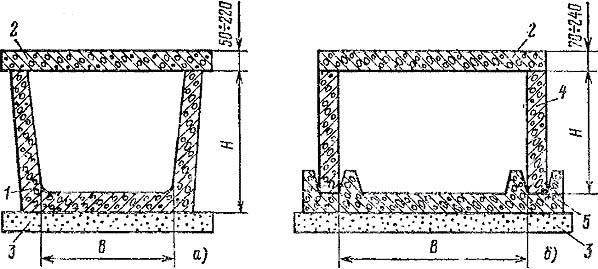
Кабельные каналы:
а — лотковый типа ЛК; б — из сборных плит типа СК:1 — лоток; 2 — плита перекрытия; 3 — подготовка; 4 — плита стеновая; 5 — основание
Высота кабельных каналов в свету не ограничивается, но бывает не более 1200 мм. Ширина каналов определяется в зависимости от размеров применяемых кабельных конструкций из условия сохранения прохода не менее 300 мм при глубине канала до 600 мм, 450 мм — от более 600 до 900 мм, 600 мм при более 900 мм.
Полы в каналах выполняют с уклоном не менее 0,5% в сторону водосборников или ливневой канализации.
Для крепления кабельных конструкций в стенах каналов через каждые 0,8—1 м (по длине) устанавливают закладные детали. При заводском изготовлении стеновых панелей детали устанавливают на предприятии-изготовителе. Закладные детали в каналах глубиной до 600 мм располагают в один ряд, при большей глубине каналов — в два ряда.
В местах поворота и разветвления трассы устраивают уширительные камеры, размеры которых выбирают с учетом допускаемого радиуса изгиба прокладываемого кабеля.
[ http://forca.ru/knigi/oborudovanie/priemka-zdaniy-i-sooruzheniy-pod-montazh-elektrooborudovaniya-11.html]Недопустимые, нерекомендуемые
Примечание(1)- Мнение автора карточкиТематики
- кабели, провода...
- электропроводка, электромонтаж
- электроустановки
Обобщающие термины
EN
- cable channel
- cable duct
- cable trench
- cabling
- conduit
- duct
- electric raceway
- raceway
- trench for cabling
DE
FR
- caniveau du câble
- caniveau, m
- conduite du câble
канал для электропроводки
—
[Я.Н.Лугинский, М.С.Фези-Жилинская, Ю.С.Кабиров. Англо-русский словарь по электротехнике и электроэнергетике, Москва, 1999 г.]Тематики
- электротехника, основные понятия
EN
прямая секция кабельного короба
Основной компонент системы кабельных коробов, состоящий из основания (корпуса) со съемной или открывающейся крышкой
[ ГОСТ Р МЭК 61084-1 2007]
прямая секция
Для прямолинейных участков электропроводки без ответвлений и для прямолинейных участков электропроводки с устройствами для ответвлений одиночными кабелями
[ ГОСТ 20803-81]
прямая секция кабельного короба
-
[IEV number 442-02-37]EN
trunking length
the main component of a cable trunking system comprising a base with a removable cover
[IEV number 442-02-37]FR
(longueur de) goulotte
élément principal d'un système de goulottes constitué d'un fond avec un couvercle amovible
[IEV number 442-02-37]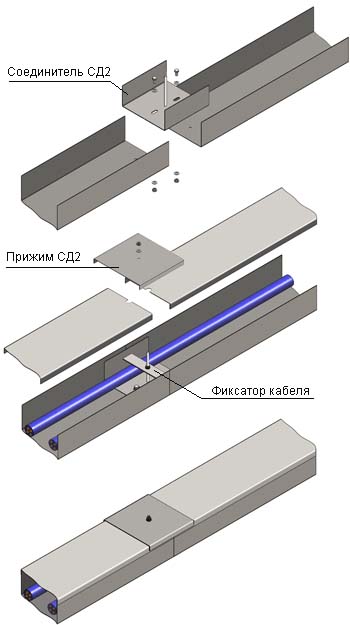
Прямая секция кабельного короба
[ http://mks.montak.ru/catalog/182/232]Тематики
- изделие электромонтажное
- электропроводка, электромонтаж
EN
DE
FR
рабочая поверхность подшипника
—
[А.С.Гольдберг. Англо-русский энергетический словарь. 2006 г.]Тематики
EN
система кабельных коробов
Система замкнутых оболочек, состоящих из основания (корпуса) и съемной крышки, предназначенная дляполного заключения в себяпрокладки внутри неё изолированных проводов, кабелей, шнуров и (или) для размещения другого электрического оборудования, включая оборудование информационных технологий.
[ ГОСТ Р МЭК 60050-826-2009]
система кабельных коробов
Система замкнутых оболочек, состоящих из корпуса со съемной или открывающейся крышкой, предназначенная для прокладки внутри нее изолированных проводов, кабелей и шнуров и/или для размещения другого электрооборудования.
[ ГОСТ Р МЭК 61084-1 2007]
кабельнесущая система
Система закрытых оболочек, допускающая размещение изолированных проводов на базе подвижных поверхностей и предназначенная для полной защиты изолированных проводов, кабелей, шнуров, а также для размещения другого электрооборудования.
система кабельных коробов
Система закрываемых полых конструкций, состоящая из основания (корпуса) и съемной крышки, предназначенная для прокладки внутри них и защиты от механических повреждений кабелей, шнуров, изолированных проводов и (или) для размещения другого электрического оборудования, включая оборудование информационных технологий.
[ ГОСТ Р МЭК 60204-1-2007]
Примечание. Синим цветом обозначен вариант, предлагаемый автором карточки.EN
cable trunking system
a system of closed enclosures comprising a base with a removable cover, intended for the complete surrounding of insulated conductors, cables, cords and/or for the accommodation of other electrical accessories
Source: 826-06-04 MOD
[IEV number 442-02-34]
cable trunking system
system of closed enclosures comprising a base with a removable cover, intended for the complete surrounding of insulated conductors, cables, cords and/or for the accommodation of other electric equipment including information technology equipment
Source: 442-02-34 MOD
[IEV number 826-15-04]
[IEC 60204-1-2006]FR
système de goulottes
ensemble d'enveloppes fermées munies d'un fond avec un couvercle amovible et destiné à la protection complète de conducteurs isolés et de câbles, ou au logement d'autre petit appareillage électrique
Source: 826-06-04 MOD
[IEV number 442-02-34]
système de goulottes, m
ensemble d'enveloppes fermées, munies d'un fond avec un couvercle amovible et destiné à la protection complète des conducteurs isolés et des câbles et/ou au logement d'autres matériels électriques y compris des matériels de traitement de l'information
Source: 442-02-34 MOD
[IEV number 826-15-04]Обратите внимание!
Различают два вида систем кабельных коробов:
1) (просто) система кабельных коробов (cable trunking system) - система любого сечения, но обязательно с крышкой;
2) система специальных кабельных коробов (cable ducting system) - система некруглого сечения и без крышек.
Примечание. В ПУЭ короб без крышки называется глухой короб (см. кабельный короб)
[Автор карточки]
Параллельные тексты EN-RU
Raceways shall be one- or two-piece design with base and snap-on cover, or three-piece design with base and two snap-on covers which snap side by side on a common base.
[Legrand/Wiremold. SECTION 16130 RACEWAY AND BOXES]В состав поставки входят специальные (глухие) кабельные короба, а также кабельные короба, состоящие из основания и защелкивающейся крышки, или из основания и двух защелкивающихся крышек.
[Перевод Интент]
1 - Система кабельных коробов
Система кабельных коробов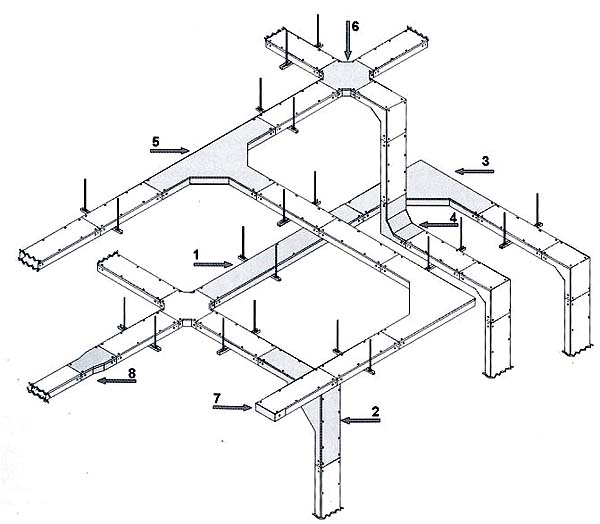
Система кабельных коробов
Недопустимые, нерекомендуемые
Примечание(1) - мнение автора карточкиТематики
- изделие электромонтажное
- электропроводка, электромонтаж
EN
DE
FR
система специальных кабельных коробов
Система замкнутых оболочек некруглого сечения, не имеющая съемных или открывающихся крышек, предназначенная для прокладки изолированных проводов, кабелей и шнуров в электрических установках, допускающая их затяжку в нее и их замену
[ ГОСТ Р МЭК 60050-826-2009]
система специальных кабельных коробов
Система коробовпрямоугольногонекруглого сечения, не имеющих съемных или открывающихся крышек, предназначенная для прокладки внутри нее изолированных проводов и кабелей и обеспечивающая возможность затяжки в короба проводов и кабелей и их замены.
[ ГОСТ Р МЭК 61084-1 2007]EN
cable ducting system
a system of closed enclosures of non-circular section, for insulated conductors, cables and cords in electrical installations, allowing them to be drawn in and replaced
[IEV number 442-02-35]FR
système de conduits profilés
ensemble d'enveloppes fermées, de section non circulaire, destiné à la mise en place ou au remplacement de conducteurs isolés ou de câbles, par tirage, dans des installations électriques
[IEV number 442-02-35]Обратите внимание!
Различают два вида систем кабельных коробов:
1) (просто) система кабельных коробов (cable trunking system) - система любого сечения, но обязательно с крышкой;
2) система специальных кабельных коробов (cable ducting system) - система некруглого сечения и без крышек.
[Интент]
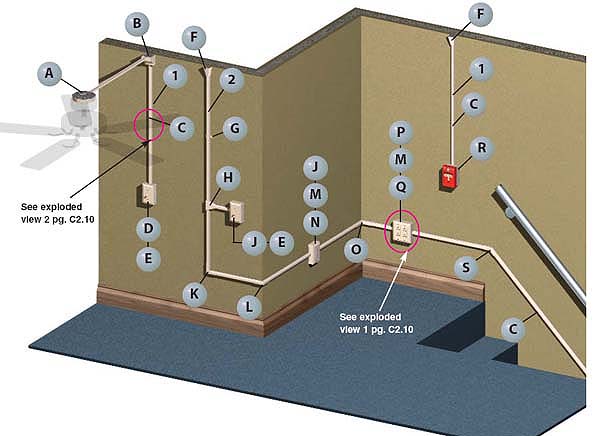
Рис. Panduit®
Система специальных кабельных коробов
Рис. Panduit®
Прямая секция системы специальных кабельных коробовТематики
- изделие электромонтажное
- электропроводка, электромонтаж
EN
DE
- geschlossener Elektroinstallationskanal, m
FR
труба
Компонентзащищеннойтрубной электропроводки, имеющий, как правило, круглое поперечное сечение, предназначенный для прокладки изолированных проводов и(или) кабелей в электрических или коммуникационных установках, допускающий их затяжку в него и(или) их замену.
ПримечаниеСоединения труб должны быть достаточно плотными, чтобы изолированные провода и (или) кабели могли быть только затянуты, но не введены сбоку в просвет между трубами.
Трубы должны располагаться достаточно близко друг от друга, так чтобы отсутствовала возможность затянуть изолированные провода и (или) кабели в просвет между ними.
[ ГОСТ Р МЭК 60050-826-2009]
трубопроводтруба
Закрытый элемент кабельной конструкцииКомпонент трубной электропроводки круглого или иного сечения для прокладки в электрических установках кабелей и/или изолированных проводови/или кабелей в электрических установках,позволяющий производить ихвыемкузатяжку и/или замену.
Примечание
Трубопроводы должны быть закрыты таким образом, чтобы имелась возможность вставлять в них изолированные провода и/или кабели.
Трубы должны располагаться достаточно близко друг от друга, так чтобы отсутствовала возможность затянуть изолированные провода и (или) кабели в просвет между ними.
[ ГОСТ Р МЭК 60204-1-2007]
Примечание. Синим цветом обозначен вариант, предлагаемый автором карточки.EN
conduit
a part of a closed wiring system of generally circular cross section for insulated conductors and/or cables in electrical or communication installations, allowing them to be drawn in and/or replaced
Source: 826-06-03 MOD
[IEV number 442-02-03]
conduit
part of a closed wiring system of circular or non-circular cross-section for insulated conductors and/or cables in electrical installations, allowing them to be drawn in and/or replaced
NOTE Conduits should be sufficiently close-jointed so that the insulated conductors and/or cables can only be drawn in and not inserted laterally.
[IEV 826-06-03]
[IEC 60204-1-2006]
raceway
A tube that encloses and protects electric wires.
[ http://www.answers.com/topic/raceway]FR
conduit
élément d'un système de canalisation fermé de section droite généralement circulaire, destiné à la mise en place par tirage ou au remplacement des conducteurs ou des câbles isolés dans les installations électriques ou de télécommunication
Source: 826-06-03 MOD
[IEV number 442-02-03]См. также пластмассовые трубы для электропроводок
См. также стальные трубы для электропроводок
4.1. Для прокладки проводов и кабелей необходимо применять специальные трубы для электропроводок: гладкие из непластифицированного ПВХ по ТУ 6-19-215-86, прил. 2; гладкие из вторичного ПЭ по ТУ 63.178-103-85, прил. 3; гладкие из наполненного ПЭ по ТУ 6-19-051-575-85, прил. 4; гофрированные из НПВХ по ТУ 6-19-051-419-84, прил. 5; гофрированные из ПЭ по ТУ 6-19-051-518-87, прил.6; гофрированные из вторичного ПЭ по ТУ 63.178-117-87, прил.7. При отсутствии указанных труб применяют технологические трубы: гладкие напорные из НПВХ по ТУ 6-19-231-87, прил.8; гладкие напорные из ПЭ низкого и высокого давления по ГОСТ 18599-83, прил. 9; гладкие из ПП по ТУ 38-102-100-76, прил. 10; трубы из вторичного ПЭ по ТУ 6-19-133-79, прил. П.
...
4.3. Применяют также трубы стальные электросварные по ГОСТ 10704-76 сортамент, прил. 12, легкие и обыкновенные водогазопроводные по ГОСТ 3262-75*, прил.13.[Министерство архитектуры, строительства и жилищно-коммунального хозяйства. Концерн «ЭЛЕКТРОМОНТАЖ». Инструкция по монтажу электропроводок в трубах]
Недопустимые, нерекомендуемые
Примечание(1)- Мнение автора карточкиТематики
- электропроводка, электромонтаж
Синонимы
EN
DE
FR
Англо-русский словарь нормативно-технической терминологии > raceway
-
7 conduit
изоляционная трубка
—
[Я.Н.Лугинский, М.С.Фези-Жилинская, Ю.С.Кабиров. Англо-русский словарь по электротехнике и электроэнергетике, Москва, 1999 г.]Тематики
- электротехника, основные понятия
EN
кабелепровод
Любой канал, обеспечивающий прокладку кабелей, в том числе, металлические и пластмассовые трубопроводы, рукава, каналы в полах, сотовые фальшполы, сетчатые лотки, желоба и кабель каналы (ISO/IEC 11801).
[ http://www.iks-media.ru/glossary/index.html?glossid=2400324]
кабелепровод
трасса
кабельный канал
Трасса или структура, предназначенная или используемая для прокладки и монтажа телекоммуникационных кабелей.
[ http://www.lanmaster.ru/SKS/DOKUMENT/568b.htm]Тематики
- СКС (структурированные кабельные системы)
- электропроводка, электромонтаж
EN
кабельная канализация
—
[Л.Г.Суменко. Англо-русский словарь по информационным технологиям. М.: ГП ЦНИИС, 2003.]Тематики
EN
кабельный канал
Кабельным каналом называется закрытое и заглубленное (частично или полностью) в грунт, пол, перекрытие и т. п. непроходное сооружение, предназначенное для размещения в нем кабелей, укладку, осмотр и ремонт которых возможно производить лишь при снятом перекрытии.
[ПУЭ. Раздел 2]
кабельный канал
Элемент системы электропроводки, расположенный над землей или полом или в земле или в полу, открытый, вентилируемый или замкнутый, размеры которого не позволяют вход людей, но обеспечивают доступ к трубам и (или) кабелям по всей длине в процессе монтажа и после него.
Примечание - Кабельный канал может составлять или не составлять часть конструкции здания
[ ГОСТ Р МЭК 60050-826-2009]
канал кабельный
Подземный непроходной канал, предназначенный для размещения электрических кабелей
[Терминологический словарь по строительству на 12 языках (ВНИИИС Госстроя СССР)]EN
cable channel
element of a wiring system above or in the ground or floor, open, ventilated or closed, and having dimensions which do not permit the entry of persons but allow access to the conduits and/or cables throughout their length during and after installation
NOTE – A cable channel may or may not form part of the building construction.
[IEV number 826-15-06]FR
caniveau, m
élément de canalisation situé au-dessus ou dans le sol ou le plancher, ouvert, ventilé ou fermé, ayant des dimensions ne permettant pas aux personnes d'y circuler, mais dans lequel les conduits ou câbles sont accessibles sur toute leur longueur, pendant et après installation
NOTE – Un caniveau peut ou non faire partie de la construction du bâtiment.
[IEV number 826-15-06]
Кабельные каналы:
а — лотковый типа ЛК; б — из сборных плит типа СК:1 — лоток; 2 — плита перекрытия; 3 — подготовка; 4 — плита стеновая; 5 — основание
Высота кабельных каналов в свету не ограничивается, но бывает не более 1200 мм. Ширина каналов определяется в зависимости от размеров применяемых кабельных конструкций из условия сохранения прохода не менее 300 мм при глубине канала до 600 мм, 450 мм — от более 600 до 900 мм, 600 мм при более 900 мм.
Полы в каналах выполняют с уклоном не менее 0,5% в сторону водосборников или ливневой канализации.
Для крепления кабельных конструкций в стенах каналов через каждые 0,8—1 м (по длине) устанавливают закладные детали. При заводском изготовлении стеновых панелей детали устанавливают на предприятии-изготовителе. Закладные детали в каналах глубиной до 600 мм располагают в один ряд, при большей глубине каналов — в два ряда.
В местах поворота и разветвления трассы устраивают уширительные камеры, размеры которых выбирают с учетом допускаемого радиуса изгиба прокладываемого кабеля.
[ http://forca.ru/knigi/oborudovanie/priemka-zdaniy-i-sooruzheniy-pod-montazh-elektrooborudovaniya-11.html]Недопустимые, нерекомендуемые
Примечание(1)- Мнение автора карточкиТематики
- кабели, провода...
- электропроводка, электромонтаж
- электроустановки
Обобщающие термины
EN
- cable channel
- cable duct
- cable trench
- cabling
- conduit
- duct
- electric raceway
- raceway
- trench for cabling
DE
FR
- caniveau du câble
- caniveau, m
- conduite du câble
труба
Компонентзащищеннойтрубной электропроводки, имеющий, как правило, круглое поперечное сечение, предназначенный для прокладки изолированных проводов и(или) кабелей в электрических или коммуникационных установках, допускающий их затяжку в него и(или) их замену.
ПримечаниеСоединения труб должны быть достаточно плотными, чтобы изолированные провода и (или) кабели могли быть только затянуты, но не введены сбоку в просвет между трубами.
Трубы должны располагаться достаточно близко друг от друга, так чтобы отсутствовала возможность затянуть изолированные провода и (или) кабели в просвет между ними.
[ ГОСТ Р МЭК 60050-826-2009]
трубопроводтруба
Закрытый элемент кабельной конструкцииКомпонент трубной электропроводки круглого или иного сечения для прокладки в электрических установках кабелей и/или изолированных проводови/или кабелей в электрических установках,позволяющий производить ихвыемкузатяжку и/или замену.
Примечание
Трубопроводы должны быть закрыты таким образом, чтобы имелась возможность вставлять в них изолированные провода и/или кабели.
Трубы должны располагаться достаточно близко друг от друга, так чтобы отсутствовала возможность затянуть изолированные провода и (или) кабели в просвет между ними.
[ ГОСТ Р МЭК 60204-1-2007]
Примечание. Синим цветом обозначен вариант, предлагаемый автором карточки.EN
conduit
a part of a closed wiring system of generally circular cross section for insulated conductors and/or cables in electrical or communication installations, allowing them to be drawn in and/or replaced
Source: 826-06-03 MOD
[IEV number 442-02-03]
conduit
part of a closed wiring system of circular or non-circular cross-section for insulated conductors and/or cables in electrical installations, allowing them to be drawn in and/or replaced
NOTE Conduits should be sufficiently close-jointed so that the insulated conductors and/or cables can only be drawn in and not inserted laterally.
[IEV 826-06-03]
[IEC 60204-1-2006]
raceway
A tube that encloses and protects electric wires.
[ http://www.answers.com/topic/raceway]FR
conduit
élément d'un système de canalisation fermé de section droite généralement circulaire, destiné à la mise en place par tirage ou au remplacement des conducteurs ou des câbles isolés dans les installations électriques ou de télécommunication
Source: 826-06-03 MOD
[IEV number 442-02-03]См. также пластмассовые трубы для электропроводок
См. также стальные трубы для электропроводок
4.1. Для прокладки проводов и кабелей необходимо применять специальные трубы для электропроводок: гладкие из непластифицированного ПВХ по ТУ 6-19-215-86, прил. 2; гладкие из вторичного ПЭ по ТУ 63.178-103-85, прил. 3; гладкие из наполненного ПЭ по ТУ 6-19-051-575-85, прил. 4; гофрированные из НПВХ по ТУ 6-19-051-419-84, прил. 5; гофрированные из ПЭ по ТУ 6-19-051-518-87, прил.6; гофрированные из вторичного ПЭ по ТУ 63.178-117-87, прил.7. При отсутствии указанных труб применяют технологические трубы: гладкие напорные из НПВХ по ТУ 6-19-231-87, прил.8; гладкие напорные из ПЭ низкого и высокого давления по ГОСТ 18599-83, прил. 9; гладкие из ПП по ТУ 38-102-100-76, прил. 10; трубы из вторичного ПЭ по ТУ 6-19-133-79, прил. П.
...
4.3. Применяют также трубы стальные электросварные по ГОСТ 10704-76 сортамент, прил. 12, легкие и обыкновенные водогазопроводные по ГОСТ 3262-75*, прил.13.[Министерство архитектуры, строительства и жилищно-коммунального хозяйства. Концерн «ЭЛЕКТРОМОНТАЖ». Инструкция по монтажу электропроводок в трубах]
Недопустимые, нерекомендуемые
Примечание(1)- Мнение автора карточкиТематики
- электропроводка, электромонтаж
Синонимы
EN
DE
FR
Англо-русский словарь нормативно-технической терминологии > conduit
-
8 continuous current-carrying capacity
длительная пропускная способность по току
—
[Я.Н.Лугинский, М.С.Фези-Жилинская, Ю.С.Кабиров. Англо-русский словарь по электротехнике и электроэнергетике, Москва, 1999 г.]Тематики
- электротехника, основные понятия
EN
(длительный) допустимый ток
Максимальное значение электрического тока, который может протекать длительно по проводнику, устройству или аппарату при определенных условиях без превышения определенного значения их температуры в установившемся режиме
[ ГОСТ Р МЭК 60050-826-2009]
Этот ток обозначают IZ
[ ГОСТ Р 50571. 1-2009 ( МЭК 60364-1: 2005)]EN
(continuous) current-carrying capacity
ampacity (US)
maximum value of electric current which can be carried continuously by a conductor, a device or an apparatus, under specified conditions without its steady-state temperature exceeding a specified value
[IEV number 826-11-13]
ampacity
The current in amperes that a conductor can carry continuously under the conditions of use without exceeding its temperature rating.
[National Electrical Cod]FR
courant (permanent) admissible, m
valeur maximale du courant électrique qui peut parcourir en permanence, un conducteur, un dispositif ou un appareil, sans que sa température de régime permanent, dans des conditions données, soit supérieure à la valeur spécifiée
[IEV number 826-11-13]Ampacity, the term is defined as the maximum amount of current a cable can carry before sustaining immediate or progressive deterioration. Also described as current rating or current-carrying capacity, is the RMS electric current which a device can continuously carry while remaining within its temperature rating. The ampacity of a cable depends on:
- its insulation temperature rating;
- conductor electrical properties for current;
- frequency, in the case of alternating currents;
- ability to dissipate heat, which depends on cable geometry and its surroundings;
- ambient temperature.
Electric wires have some resistance, and electric current flowing through them causes voltage drop and power dissipation, which heats the cable. Copper or aluminum can conduct a large amount of current before melting, but long before the conductors melt, their insulation would be damaged by the heat.
The ampacity for a power cable is thus based on physical and electrical properties of the material & construction of the conductor and of its insulation, ambient temperature, and environmental conditions adjacent to the cable. Having a large overall surface area may dissipate heat well if the environment can absorb the heat.
In a long run of cable, different conditions govern, and installation regulations normally specify that the most severe condition along the run governs the cable's rating. Cables run in wet or oily locations may carry a lower temperature rating than in a dry installation. Derating is necessary for multiple circuits in close proximity. When multiple cables are near, each contributes heat to the others and diminishes the amount of cooling air that can flow past the individual cables. The overall ampacity of the insulated conductors in a bundle of more than 3 must be derated, whether in a raceway or cable. Usually the de-rating factor is tabulated in a nation's wiring regulations.
Depending on the type of insulating material, common maximum allowable temperatures at the surface of the conductor are 60, 75 and 90 degrees Celsius, often with an ambient air temperature of 30°C. In the U.S., 105°C is allowed with ambient of 40°C, for larger power cables, especially those operating at more than 2 kV. Likewise, specific insulations are rated 150, 200 or 250°C.
The allowed current in cables generally needs to be decreased (derated) when the cable is covered with fireproofing material.
For example, the United States National Electric Code, Table 310-16, specifies that up to three 8 AWG copper wires having a common insulating material (THWN) in a raceway, cable, or direct burial has an ampacity of 50 A when the ambient air is 30°C, the conductor surface temperature allowed to be 75°C. A single insulated conductor in air has 70 A rating.
Ampacity rating is normally for continuous current, and short periods of overcurrent occur without harm in most cabling systems. The acceptable magnitude and duration of overcurrent is a more complex topic than ampacity.
When designing an electrical system, one will normally need to know the current rating for the following:- Wires
- Printed Circuit Board traces, where included
- Fuses
- Circuit breakers
- All or nearly all components used
Some devices are limited by power rating, and when this power rating occurs below their current limit, it is not necessary to know the current limit to design a system. A common example of this is lightbulb holders.
[http://en.wikipedia.org/wiki/Ampacity]
Тематики
- электротехника, основные понятия
Синонимы
EN
DE
- Dauerstrombelastbarkeit, f
- Strombelastbarkeit, f
FR
- courant admissible, m
- courant permanent admissible, m
Англо-русский словарь нормативно-технической терминологии > continuous current-carrying capacity
-
9 ampacity (US)
(длительный) допустимый ток
Максимальное значение электрического тока, который может протекать длительно по проводнику, устройству или аппарату при определенных условиях без превышения определенного значения их температуры в установившемся режиме
[ ГОСТ Р МЭК 60050-826-2009]
Этот ток обозначают IZ
[ ГОСТ Р 50571. 1-2009 ( МЭК 60364-1: 2005)]EN
(continuous) current-carrying capacity
ampacity (US)
maximum value of electric current which can be carried continuously by a conductor, a device or an apparatus, under specified conditions without its steady-state temperature exceeding a specified value
[IEV number 826-11-13]
ampacity
The current in amperes that a conductor can carry continuously under the conditions of use without exceeding its temperature rating.
[National Electrical Cod]FR
courant (permanent) admissible, m
valeur maximale du courant électrique qui peut parcourir en permanence, un conducteur, un dispositif ou un appareil, sans que sa température de régime permanent, dans des conditions données, soit supérieure à la valeur spécifiée
[IEV number 826-11-13]Ampacity, the term is defined as the maximum amount of current a cable can carry before sustaining immediate or progressive deterioration. Also described as current rating or current-carrying capacity, is the RMS electric current which a device can continuously carry while remaining within its temperature rating. The ampacity of a cable depends on:
- its insulation temperature rating;
- conductor electrical properties for current;
- frequency, in the case of alternating currents;
- ability to dissipate heat, which depends on cable geometry and its surroundings;
- ambient temperature.
Electric wires have some resistance, and electric current flowing through them causes voltage drop and power dissipation, which heats the cable. Copper or aluminum can conduct a large amount of current before melting, but long before the conductors melt, their insulation would be damaged by the heat.
The ampacity for a power cable is thus based on physical and electrical properties of the material & construction of the conductor and of its insulation, ambient temperature, and environmental conditions adjacent to the cable. Having a large overall surface area may dissipate heat well if the environment can absorb the heat.
In a long run of cable, different conditions govern, and installation regulations normally specify that the most severe condition along the run governs the cable's rating. Cables run in wet or oily locations may carry a lower temperature rating than in a dry installation. Derating is necessary for multiple circuits in close proximity. When multiple cables are near, each contributes heat to the others and diminishes the amount of cooling air that can flow past the individual cables. The overall ampacity of the insulated conductors in a bundle of more than 3 must be derated, whether in a raceway or cable. Usually the de-rating factor is tabulated in a nation's wiring regulations.
Depending on the type of insulating material, common maximum allowable temperatures at the surface of the conductor are 60, 75 and 90 degrees Celsius, often with an ambient air temperature of 30°C. In the U.S., 105°C is allowed with ambient of 40°C, for larger power cables, especially those operating at more than 2 kV. Likewise, specific insulations are rated 150, 200 or 250°C.
The allowed current in cables generally needs to be decreased (derated) when the cable is covered with fireproofing material.
For example, the United States National Electric Code, Table 310-16, specifies that up to three 8 AWG copper wires having a common insulating material (THWN) in a raceway, cable, or direct burial has an ampacity of 50 A when the ambient air is 30°C, the conductor surface temperature allowed to be 75°C. A single insulated conductor in air has 70 A rating.
Ampacity rating is normally for continuous current, and short periods of overcurrent occur without harm in most cabling systems. The acceptable magnitude and duration of overcurrent is a more complex topic than ampacity.
When designing an electrical system, one will normally need to know the current rating for the following:- Wires
- Printed Circuit Board traces, where included
- Fuses
- Circuit breakers
- All or nearly all components used
Some devices are limited by power rating, and when this power rating occurs below their current limit, it is not necessary to know the current limit to design a system. A common example of this is lightbulb holders.
[http://en.wikipedia.org/wiki/Ampacity]
Тематики
- электротехника, основные понятия
Синонимы
EN
DE
- Dauerstrombelastbarkeit, f
- Strombelastbarkeit, f
FR
- courant admissible, m
- courant permanent admissible, m
Англо-русский словарь нормативно-технической терминологии > ampacity (US)
-
10 continuous current
(длительный) допустимый ток
Максимальное значение электрического тока, который может протекать длительно по проводнику, устройству или аппарату при определенных условиях без превышения определенного значения их температуры в установившемся режиме
[ ГОСТ Р МЭК 60050-826-2009]
Этот ток обозначают IZ
[ ГОСТ Р 50571. 1-2009 ( МЭК 60364-1: 2005)]EN
(continuous) current-carrying capacity
ampacity (US)
maximum value of electric current which can be carried continuously by a conductor, a device or an apparatus, under specified conditions without its steady-state temperature exceeding a specified value
[IEV number 826-11-13]
ampacity
The current in amperes that a conductor can carry continuously under the conditions of use without exceeding its temperature rating.
[National Electrical Cod]FR
courant (permanent) admissible, m
valeur maximale du courant électrique qui peut parcourir en permanence, un conducteur, un dispositif ou un appareil, sans que sa température de régime permanent, dans des conditions données, soit supérieure à la valeur spécifiée
[IEV number 826-11-13]Ampacity, the term is defined as the maximum amount of current a cable can carry before sustaining immediate or progressive deterioration. Also described as current rating or current-carrying capacity, is the RMS electric current which a device can continuously carry while remaining within its temperature rating. The ampacity of a cable depends on:
- its insulation temperature rating;
- conductor electrical properties for current;
- frequency, in the case of alternating currents;
- ability to dissipate heat, which depends on cable geometry and its surroundings;
- ambient temperature.
Electric wires have some resistance, and electric current flowing through them causes voltage drop and power dissipation, which heats the cable. Copper or aluminum can conduct a large amount of current before melting, but long before the conductors melt, their insulation would be damaged by the heat.
The ampacity for a power cable is thus based on physical and electrical properties of the material & construction of the conductor and of its insulation, ambient temperature, and environmental conditions adjacent to the cable. Having a large overall surface area may dissipate heat well if the environment can absorb the heat.
In a long run of cable, different conditions govern, and installation regulations normally specify that the most severe condition along the run governs the cable's rating. Cables run in wet or oily locations may carry a lower temperature rating than in a dry installation. Derating is necessary for multiple circuits in close proximity. When multiple cables are near, each contributes heat to the others and diminishes the amount of cooling air that can flow past the individual cables. The overall ampacity of the insulated conductors in a bundle of more than 3 must be derated, whether in a raceway or cable. Usually the de-rating factor is tabulated in a nation's wiring regulations.
Depending on the type of insulating material, common maximum allowable temperatures at the surface of the conductor are 60, 75 and 90 degrees Celsius, often with an ambient air temperature of 30°C. In the U.S., 105°C is allowed with ambient of 40°C, for larger power cables, especially those operating at more than 2 kV. Likewise, specific insulations are rated 150, 200 or 250°C.
The allowed current in cables generally needs to be decreased (derated) when the cable is covered with fireproofing material.
For example, the United States National Electric Code, Table 310-16, specifies that up to three 8 AWG copper wires having a common insulating material (THWN) in a raceway, cable, or direct burial has an ampacity of 50 A when the ambient air is 30°C, the conductor surface temperature allowed to be 75°C. A single insulated conductor in air has 70 A rating.
Ampacity rating is normally for continuous current, and short periods of overcurrent occur without harm in most cabling systems. The acceptable magnitude and duration of overcurrent is a more complex topic than ampacity.
When designing an electrical system, one will normally need to know the current rating for the following:- Wires
- Printed Circuit Board traces, where included
- Fuses
- Circuit breakers
- All or nearly all components used
Some devices are limited by power rating, and when this power rating occurs below their current limit, it is not necessary to know the current limit to design a system. A common example of this is lightbulb holders.
[http://en.wikipedia.org/wiki/Ampacity]
Тематики
- электротехника, основные понятия
Синонимы
EN
DE
- Dauerstrombelastbarkeit, f
- Strombelastbarkeit, f
FR
- courant admissible, m
- courant permanent admissible, m
непрерывный ток
—
[Я.Н.Лугинский, М.С.Фези-Жилинская, Ю.С.Кабиров. Англо-русский словарь по электротехнике и электроэнергетике, Москва, 1999]Тематики
- электротехника, основные понятия
EN
Англо-русский словарь нормативно-технической терминологии > continuous current
-
11 current-carrying capacity
(длительный) допустимый ток
Максимальное значение электрического тока, который может протекать длительно по проводнику, устройству или аппарату при определенных условиях без превышения определенного значения их температуры в установившемся режиме
[ ГОСТ Р МЭК 60050-826-2009]
Этот ток обозначают IZ
[ ГОСТ Р 50571. 1-2009 ( МЭК 60364-1: 2005)]EN
(continuous) current-carrying capacity
ampacity (US)
maximum value of electric current which can be carried continuously by a conductor, a device or an apparatus, under specified conditions without its steady-state temperature exceeding a specified value
[IEV number 826-11-13]
ampacity
The current in amperes that a conductor can carry continuously under the conditions of use without exceeding its temperature rating.
[National Electrical Cod]FR
courant (permanent) admissible, m
valeur maximale du courant électrique qui peut parcourir en permanence, un conducteur, un dispositif ou un appareil, sans que sa température de régime permanent, dans des conditions données, soit supérieure à la valeur spécifiée
[IEV number 826-11-13]Ampacity, the term is defined as the maximum amount of current a cable can carry before sustaining immediate or progressive deterioration. Also described as current rating or current-carrying capacity, is the RMS electric current which a device can continuously carry while remaining within its temperature rating. The ampacity of a cable depends on:
- its insulation temperature rating;
- conductor electrical properties for current;
- frequency, in the case of alternating currents;
- ability to dissipate heat, which depends on cable geometry and its surroundings;
- ambient temperature.
Electric wires have some resistance, and electric current flowing through them causes voltage drop and power dissipation, which heats the cable. Copper or aluminum can conduct a large amount of current before melting, but long before the conductors melt, their insulation would be damaged by the heat.
The ampacity for a power cable is thus based on physical and electrical properties of the material & construction of the conductor and of its insulation, ambient temperature, and environmental conditions adjacent to the cable. Having a large overall surface area may dissipate heat well if the environment can absorb the heat.
In a long run of cable, different conditions govern, and installation regulations normally specify that the most severe condition along the run governs the cable's rating. Cables run in wet or oily locations may carry a lower temperature rating than in a dry installation. Derating is necessary for multiple circuits in close proximity. When multiple cables are near, each contributes heat to the others and diminishes the amount of cooling air that can flow past the individual cables. The overall ampacity of the insulated conductors in a bundle of more than 3 must be derated, whether in a raceway or cable. Usually the de-rating factor is tabulated in a nation's wiring regulations.
Depending on the type of insulating material, common maximum allowable temperatures at the surface of the conductor are 60, 75 and 90 degrees Celsius, often with an ambient air temperature of 30°C. In the U.S., 105°C is allowed with ambient of 40°C, for larger power cables, especially those operating at more than 2 kV. Likewise, specific insulations are rated 150, 200 or 250°C.
The allowed current in cables generally needs to be decreased (derated) when the cable is covered with fireproofing material.
For example, the United States National Electric Code, Table 310-16, specifies that up to three 8 AWG copper wires having a common insulating material (THWN) in a raceway, cable, or direct burial has an ampacity of 50 A when the ambient air is 30°C, the conductor surface temperature allowed to be 75°C. A single insulated conductor in air has 70 A rating.
Ampacity rating is normally for continuous current, and short periods of overcurrent occur without harm in most cabling systems. The acceptable magnitude and duration of overcurrent is a more complex topic than ampacity.
When designing an electrical system, one will normally need to know the current rating for the following:- Wires
- Printed Circuit Board traces, where included
- Fuses
- Circuit breakers
- All or nearly all components used
Some devices are limited by power rating, and when this power rating occurs below their current limit, it is not necessary to know the current limit to design a system. A common example of this is lightbulb holders.
[http://en.wikipedia.org/wiki/Ampacity]
Тематики
- электротехника, основные понятия
Синонимы
EN
DE
- Dauerstrombelastbarkeit, f
- Strombelastbarkeit, f
FR
- courant admissible, m
- courant permanent admissible, m
предельно допустимый ток
—
[Я.Н.Лугинский, М.С.Фези-Жилинская, Ю.С.Кабиров. Англо-русский словарь по электротехнике и электроэнергетике, Москва, 1999 г.]Тематики
- электротехника, основные понятия
EN
прочность печатной платы к токовой нагрузке
Свойство печатной платы сохранять электрические и механические характеристики после воздействия максимально допустимой токовой нагрузки на печатный проводник или металлизированное отверстие печатной платы.
[ ГОСТ Р 53386-2009]Тематики
EN
Англо-русский словарь нормативно-технической терминологии > current-carrying capacity
-
12 switching substation
- распределительное устройство
- подстанция
- переключательный пункт
- (электрическое) распределительное устройство
переключательный пункт
—
[Я.Н.Лугинский, М.С.Фези-Жилинская, Ю.С.Кабиров. Англо-русский словарь по электротехнике и электроэнергетике, Москва, 1999 г.]Тематики
- электротехника, основные понятия
EN
подстанция
Электроустановка, предназначенная для преобразования и распределения электрической энергии.
[ ГОСТ 19431-84]
подстанция
Подстанцией (ПС) называется электроустановка, служащая для преобразования и распределения электроэнергии и состоящая из трансформаторов или других преобразователей энергии, распределительных устройств, устройств управления и вспомогательных сооружений.
[РД 34.20.185-94]
подстанция
Электроустановка, предназначенная для приема, преобразования и распределения электрической энергии, состоящая из трансформаторов или других преобразователей электрической энергии, устройств управления, распределительных и вспомогательных устройств по ГОСТ 19431.
[ ГОСТ 24291-90]
подстанция электрическая
Группа установок и оборудования, размещаемая в здании или на открытой площадке, предназначенная для преобразования параметров передаваемой электроэнергии или распределения её
[Терминологический словарь по строительству на 12 языках (ВНИИИС Госстроя СССР)]
электрическая подстанция
Электроустановка, предназначенная для преобразования и распределения электрической энергии.
[ПОТ Р М-016-2001]
[РД 153-34.0-03.150-00]EN
substation (of a power system)
a part of an electrical system, con-fined to a given area, mainly including ends of transmission or distribution lines, electrical switchgear and controlgear, buildings and transformers. A substation generally includes safety or control devices (for example protection)
NOTE – The substation can be qualified according to the designation of the system of which it forms a part. Examples: transmission substation (transmission system), distribution substation, 400 kV or 20 kV substation.
[IEV number 601-03-02 ]FR
poste (d'un réseau électrique)
partie d'un réseau électrique, située en un même lieu, comprenant principalement les extrémités des lignes de transport ou de distribution, de l'appareillage électrique, des bâtiments, et, éventuellement, des transformateurs. Un poste comprend généralement les dispositifs destinés à la sécurité et à la conduite du réseau (par exemple les protections)
NOTE – Selon le type de réseau auquel appartient le poste, il peut être qualifié par la désignation du réseau. Exemples: poste de transport (réseau de transport), poste de distribution, poste à 400 kV, poste à 20 kV.
[IEV number 601-03-02 ]Подстанции с трансформаторами, преобразующие электрическую энергию только по напряжению, называются трансформаторными; а преобразующие электроэнергию по напряжению и другим параметрам (изменение частоты, выпрямление тока), — преобразовательными. На ПС могут устанавливаться два и более, как правило, трехфазных трансформатора. Установка более двух трансформаторов принимается на основе технико-экономических расчетов, а также в случаях, когда на ПС применяется два средних напряжения. При отсутствии трехфазного трансформатора необходимой мощности, а также при транспортных ограничениях возможно применение группы однофазных трансформаторов. Подстанция, как правило, состоит из нескольких РУ разных ступеней напряжения, соединенных между собой трансформаторной (автотрансформаторной) связью;
[ http://energy-ua.com/elektricheskie-p/klassifikatsiya.html]Тематики
Синонимы
EN
- electric power substation
- electric substation
- SS
- station
- sub
- substation
- substation (of a power system)
- switching station
- switching substation
DE
FR
- poste (d`un reseau electrique)
- sous-station électrique
распределительное устройство
Распределительным устройством (РУ) называется электроустановка, служащая для приема и распределения электроэнергии и содержащая сборные и соединительные шины, коммутационные аппараты, вспомогательные устройства (компрессорные, аккумуляторные и др.), а также устройства защиты, автоматики и измерительные приборы.
[РД 34.20.185-94]
распределительное устройство
Электроустановка, предназначенная для приема и распределения электрической энергии на одном напряжении и содержащая коммутационные аппараты и соединяющие их сборные шины [секции шин], устройства управления и защиты.
Примечание. К устройствам управления относятся аппараты и связывающие их элементы обеспечивающие контроль, измерение, сигнализацию и выполнение команд.
[ ГОСТ 24291-90]
[ ГОСТ Р 53685-2009]
электрическое распределительное устройство
распределительное устройство
Устройство, предназначенное для приема и распределения электроэнергии на одном напряжении и содержащее коммутационные аппараты и соединяющие их сборные соединительные устройства.
Примечание. В состав распределительного устройства дополнительно могут входить устройства защиты и управления
[ОСТ 45.55-99]
распределительное устройство
Электроустановка, служащая для приема и распределения электроэнергии и содержащая коммутационные аппараты, сборные и соединительные шины, вспомогательные устройства (компрессорные, аккумуляторные и др.), а также устройства защиты, автоматики и измерительные приборы.
[ПОТ Р М-016-2001]
[РД 153-34.0-03.150-00]
устройство распределительное
Совокупность аппаратов и приборов для приёма и распределения электроэнергии одного напряжения, вырабатываемой электростанцией или преобразуемой подстанцией
[Терминологический словарь по строительству на 12 языках (ВНИИИС Госстроя СССР)]EN
switching substation
a substation which includes switchgear and usually busbars, but no power transformers
[IEV number 605-01-02]FR
poste de sectionnement
poste de coupure
poste comprenant des organes de manoeuvre et généralement des jeux de barres, à l'exclusion de transformateurs de puissance
[IEV number 605-01-02]В качестве РУ 6—10 кВ используется сборка высокого напряжения с однополюсными разъединителями и вертикальным расположением фаз одного присоединения и одна камера КСО с выключателем нагрузки и предохранителями для подключения трансформатора. Для РУ 0,4 кВ применяются сборки низкого напряжения с предохранителями и вертикальным расположением фаз одного присоединения.
На ПС применяются открытые (ОРУ), закрытые (ЗРУ) или комплектные (КРУ) распределительные устройства.
[ http://energy-ua.com/elektricheskie-p/klassifikatsiya.html]
В общем случае ПС и РУ являются составной частью электроустановок, которые различаются:
-
по назначению:
- генерирующие,
- преобразовательно-распределительные,
-
потребительские.
Генерирующие электроустановки служат для выработки электроэнергии, преобразовательно-распределительные электроустановки преобразуют электроэнергию в удобный для передачи и потребления вид, передают ее и распределяют между потребителями;
-
по роду тока:
- постоянного тока,
- переменного тока.
-
по напряжению:
- до 1000 В,
- выше 1000 В.
Шкала номинальных напряжений ограничена сравнительно небольшим числом стандартных значений, благодаря чему изготавливается небольшое число типоразмеров машин и оборудования, а электросети выполняются более экономичными. В установках трехфазного тока номинальным напряжением принято считать напряжение между фазами (междуфазовое напряжение). Согласно ГОСТ 29322—92 установлена следующая шкала номинальных напряжений:
для электросетей переменного тока частотой 50 Гц междуфазовое напряжение должно быть: 12, 24, 36, 42, 127, 220, 380 В; 3, 6, 10, 20, 35, 110, 150, 220, 330, 500, 750 и 1150 кВ;
для электросетей постоянного тока: 12, 24, 36, 48, 60, 110, 220, 440, 660, 825, 3000 В и выше.-
по способу присоединения к электросети ПС разделяются на:
- тупиковые (блочные),
- ответвительные (блочные),
- проходные (транзитные)
- узловые.
Тупиковые ПС получают питание по одной или двум тупиковым ВЛ.
Ответвительные ПС присоединяются ответвлением к одной или двум проходящим ВЛ с односторонним или двухсторонним питанием.
Проходные ПС включаются в рассечку одной или двух проходящих ВЛ с односторонним или двухсторонним питанием.
Узловые ПС кроме питающих имеют отходящие радиальные или транзитные ВЛ.-
по способу управления ПС могут быть:
- только с телесигнализацией,
- телеуправляемыми с телесигнализацией,
- с телесигнализацией и управлением с общеподстанционного пункта управления (ОПУ).
Подстанции оперативно обслуживаются постоянным дежурным персоналом на щите управления, дежурными на дому или оперативно-выездными бригадами (ОВБ). Ремонт ПС осуществляется специализированными выездными бригадами централизованного ремонта или местным персоналом подстанции.
В РУ напряжением до 1000 В провода, шины, аппараты, приборы и конструкции выбирают как по нормальным условиям работы (напряжению и току), так и по термическим и динамическим воздействиям токов коротких замыканий (КЗ) или предельно допустимой отключаемой мощности.
В РУ и ПС напряжением выше 1000 В расстояния между электрооборудованием, аппаратами, токоведущими частями, изоляторами, ограждениями и конструкциями устанавливаются так, чтобы при нормальном режиме работы электроустановки возникающие физические явления (температура нагрева, электрическая дуга, выброс газов, искрение и др.) не могли привести к повреждению оборудования и КЗ.[ http://energy-ua.com/elektricheskie-p/klassifikatsiya.html]
Several different classifications of switchgear can be made:- By the current rating.
-
By interrupting rating (maximum short circuit current that the device can safely interrupt)
- Circuit breakers can open and close on fault currents
- Load-break/Load-make switches can switch normal system load currents
- Isolators may only be operated while the circuit is dead, or the load current is very small.
-
By voltage class:
- Low voltage (less than 1,000 volts AC)
- Medium voltage (1,000–35,000 volts AC)
- High voltage (more than 35,000 volts AC)
-
By insulating medium:
-
By construction type:
- Indoor (further classified by IP (Ingress Protection) class or NEMA enclosure type)
- Outdoor
- Industrial
- Utility
- Marine
- Draw-out elements (removable without many tools)
- Fixed elements (bolted fasteners)
- Live-front
- Dead-front
- Open
- Metal-enclosed
- Metal-clad
- Metal enclosed & Metal clad
- Arc-resistant
-
By IEC degree of internal separation
- No Separation (Form 1)
- Busbars separated from functional units (Form 2a, 2b, 3a, 3b, 4a, 4b)
- Terminals for external conductors separated from busbars (Form 2b, 3b, 4a, 4b)
- Terminals for external conductors separated from functional units but not from each other (Form 3a, 3b)
- Functional units separated from each other (Form 3a, 3b, 4a, 4b)
- Terminals for external conductors separated from each other (Form 4a, 4b)
- Terminals for external conductors separate from their associated functional unit (Form 4b)
-
By interrupting device:
-
By operating method:
- Manually operated
- Motor/stored energy operated
- Solenoid operated
-
By type of current:
-
By application:
-
By purpose
- Isolating switches (disconnectors)
- Load-break switches.
- Grounding (earthing) switches
A single line-up may incorporate several different types of devices, for example, air-insulated bus, vacuum circuit breakers, and manually operated switches may all exist in the same row of cubicles.
Ratings, design, specifications and details of switchgear are set by a multitude of standards. In North America mostly IEEE and ANSI standards are used, much of the rest of the world uses IEC standards, sometimes with local national derivatives or variations.
[Robert W. Smeaton (ed) Switchgear and Control Handbook 3rd Ed., Mc Graw Hill, new York 1997]
[ http://en.wikipedia.org/wiki/High_voltage_switchgear]Тематики
- электрификация, электроснабж. железных дорог
- электроагрегаты генераторные
- электробезопасность
- электроснабжение в целом
Синонимы
EN
- distribution
- energy distribution board
- gear
- switch-gear
- switchboard
- switchgear
- switching substation
- switchyard
DE
FR
3 (электрическое) распределительное устройство; РУ
Электроустановка, предназначенная для приема и распределения электрической энергии на одном напряжении и содержащая коммутационные аппараты и соединяющие их сборные шины [секции шин], устройства управления и защиты.
Примечание. К устройствам управления относятся аппараты и связывающие их элементы, обеспечивающие контроль, измерение, сигнализацию и выполнение команд
605-01-02**
de Schaltstation
en switching substation
fr poste de sectionnement, poste de coupure
Источник: ГОСТ 24291-90: Электрическая часть электростанции и электрической сети. Термины и определения оригинал документа
Англо-русский словарь нормативно-технической терминологии > switching substation
-
13 electrical conduit
труба
Компонентзащищеннойтрубной электропроводки, имеющий, как правило, круглое поперечное сечение, предназначенный для прокладки изолированных проводов и(или) кабелей в электрических или коммуникационных установках, допускающий их затяжку в него и(или) их замену.
ПримечаниеСоединения труб должны быть достаточно плотными, чтобы изолированные провода и (или) кабели могли быть только затянуты, но не введены сбоку в просвет между трубами.
Трубы должны располагаться достаточно близко друг от друга, так чтобы отсутствовала возможность затянуть изолированные провода и (или) кабели в просвет между ними.
[ ГОСТ Р МЭК 60050-826-2009]
трубопроводтруба
Закрытый элемент кабельной конструкцииКомпонент трубной электропроводки круглого или иного сечения для прокладки в электрических установках кабелей и/или изолированных проводови/или кабелей в электрических установках,позволяющий производить ихвыемкузатяжку и/или замену.
Примечание
Трубопроводы должны быть закрыты таким образом, чтобы имелась возможность вставлять в них изолированные провода и/или кабели.
Трубы должны располагаться достаточно близко друг от друга, так чтобы отсутствовала возможность затянуть изолированные провода и (или) кабели в просвет между ними.
[ ГОСТ Р МЭК 60204-1-2007]
Примечание. Синим цветом обозначен вариант, предлагаемый автором карточки.EN
conduit
a part of a closed wiring system of generally circular cross section for insulated conductors and/or cables in electrical or communication installations, allowing them to be drawn in and/or replaced
Source: 826-06-03 MOD
[IEV number 442-02-03]
conduit
part of a closed wiring system of circular or non-circular cross-section for insulated conductors and/or cables in electrical installations, allowing them to be drawn in and/or replaced
NOTE Conduits should be sufficiently close-jointed so that the insulated conductors and/or cables can only be drawn in and not inserted laterally.
[IEV 826-06-03]
[IEC 60204-1-2006]
raceway
A tube that encloses and protects electric wires.
[ http://www.answers.com/topic/raceway]FR
conduit
élément d'un système de canalisation fermé de section droite généralement circulaire, destiné à la mise en place par tirage ou au remplacement des conducteurs ou des câbles isolés dans les installations électriques ou de télécommunication
Source: 826-06-03 MOD
[IEV number 442-02-03]См. также пластмассовые трубы для электропроводок
См. также стальные трубы для электропроводок
4.1. Для прокладки проводов и кабелей необходимо применять специальные трубы для электропроводок: гладкие из непластифицированного ПВХ по ТУ 6-19-215-86, прил. 2; гладкие из вторичного ПЭ по ТУ 63.178-103-85, прил. 3; гладкие из наполненного ПЭ по ТУ 6-19-051-575-85, прил. 4; гофрированные из НПВХ по ТУ 6-19-051-419-84, прил. 5; гофрированные из ПЭ по ТУ 6-19-051-518-87, прил.6; гофрированные из вторичного ПЭ по ТУ 63.178-117-87, прил.7. При отсутствии указанных труб применяют технологические трубы: гладкие напорные из НПВХ по ТУ 6-19-231-87, прил.8; гладкие напорные из ПЭ низкого и высокого давления по ГОСТ 18599-83, прил. 9; гладкие из ПП по ТУ 38-102-100-76, прил. 10; трубы из вторичного ПЭ по ТУ 6-19-133-79, прил. П.
...
4.3. Применяют также трубы стальные электросварные по ГОСТ 10704-76 сортамент, прил. 12, легкие и обыкновенные водогазопроводные по ГОСТ 3262-75*, прил.13.[Министерство архитектуры, строительства и жилищно-коммунального хозяйства. Концерн «ЭЛЕКТРОМОНТАЖ». Инструкция по монтажу электропроводок в трубах]
Недопустимые, нерекомендуемые
Примечание(1)- Мнение автора карточкиТематики
- электропроводка, электромонтаж
Синонимы
EN
DE
FR
Англо-русский словарь нормативно-технической терминологии > electrical conduit
См. также в других словарях:
Close Position — Executing a security transaction that is the exact opposite of an open position, thereby nullifying it and eliminating the initial exposure. Closing a long position in a security would entail selling it, while closing a short position in a… … Investment dictionary
Close to Home (1989 TV series) — Close to Home Genre Sitcom Created by Brian Cooke Directed by Nic Phillips (1989) Ian Hamilton (1989–90) Alistair Clarke (credited as Alistair Clark 1990) Starring … Wikipedia
Not One Less — Not One Less … Wikipedia
Close to the Edge (song) — Close to the Edge Song by Yes from the album Close to the Edge Released 1972 Genre Progressive rock Length 18:43 … Wikipedia
Close Quarters Battle — (CQB) or close quarters combat (CQC) is a type of fighting in which small units engage the enemy with personal weapons at very short range, potentially to the point of hand to hand combat. In the typical CQB scenario, the attackers try a very… … Wikipedia
Close Combat series — Close Combat The official logo of the franchise as used in the third game of the series Genres Real time Strategy Developers … Wikipedia
close company — A company effectively controlled by not more than five shareholders. Easyform Glossary of Law Terms. UK law terms. close company a UK resident company that is controlled by five or fewer participators, by participators who are director … Law dictionary
Not That Far Away — Single by Jennette McCurdy from the album Jennette McCurdy Not That Far Away Released … Wikipedia
Not on the Lips — (Pas sur la bouche) Theatrical release poster Directed by Alain Resnais Produced by … Wikipedia
Close encounter — For the films, see Close Encounters of the Third Kind and The Fourth Kind. In ufology, a close encounter is an event in which a person witnesses an unidentified flying object. This terminology and the system of classification behind it was… … Wikipedia
Close Action — For the song of the same name by Big Country, see here. Close Action is a naval board wargame published by Clash of Arms in 1997 and designed by Mark A. Campbell. The game replicates naval warfare of the 18th and early 19th centuries. The game… … Wikipedia
